


Words and Photos: Richard Opie
If you live by the title of ‘car enthusiast’ and reside within these hallowed Kiwi shores, there’s a high chance you’ve got a yarn involving a Nissan Skyline.
Sure, the old boys have their Holdens and Fords. But for us lot — the DOHC, turbo, all-wheel-drive faithful — the Skyline nameplate is pretty much an integral part of the performance car culture tapestry. It’s one of those iconic badges that’s come to epitomise the power potential of the ‘import’ scene.
If there was ever a moment in time that pinpointed the true arrival of the Nissan Skyline among the Kiwi tuner consciousness, it surely has to be within the golden era of used Japanese imports. As the sun set on the 1990s and rose, beaming into the 2000s, the business of making Japanese cars go properly fast really hit the mainstream. And the Skyline was there, particularly the R32.
You’d almost be forgiven for thinking that nothing came before it. The R32 was so ingrained in Kiwi car culture that even the smattering of earlier models — R30 and R31 chassis — rarely received a great deal of attention. But you bet your bottom yen there’s some earlier Skylines, and they’re pretty damn spectacular.
One of these, some five generations earlier than the organic curves of the R32, was the C10 chassis, colloquially known in Japan as the ‘Hakosuka.’ The nickname is explained simply. ‘Hako’ translates directly to ‘box,’ an allusion to the sharp lines of the C10 Skyline compared to its predecessors. ‘Suka,’ is an abbreviated form of the Japanese pronunciation of Skyline: ‘Sukarain’. Slap ‘em together, and you get … Hakosuka. Oh, it’s also pronounced ‘hako-ska,’ just in case you find yourself at Nostalgic 2-Days in Yokohama, hunting down vintage Nissans …
Much of the Hakosuka mystique is attributed to the KPGC10 GT-R. As the first Skyline to wear the GT-R badge, the KPGC10 represented the peak of Japanese production car motorsport of the era. Debuting in 1969, the GT-R would prove a dominant force, claiming 49 wins on the trot — foreshadowing a later GT-R reign in touring cars.
As such, the lower-grade models gained appeal, not least for their similar appearance to the GT-R, but for the tunability of the venerable L-series six-cylinder engine that most packed under the forward-opening bonnet.
There’s very few of these floating about in New Zealand, in part being too old when Japanese used imports began flooding our shores, and due to the prices they now command. We’re lucky, then, that blokes like Steve Radich build — and share — cherry examples like this blue beauty.
You might think such a niche, valuable build might be the product of a lifelong dedication to cars, but for Steve the appeal began a little later in life. Flatting — that quintessential Kiwi life event — would introduce him to what he terms as “people passionate about cars, about motorsport,” and it wouldn’t be long until gasoline had gotten under his skin.
“Two-door, rear-wheel-drive and manual,” laughs Steve as he describes what led him to an ideal platform to pop his tinkering cherry. “I got an R34 GT-T around 2005,” he explains, “and just started researching, meeting people, building up that excitement of fitting new parts and making changes.”
Things would start simple — a great place to learn the way things worked in the performance automotive space — and Steve would eventually progress to an R34 GT-R, a platform many consider peak Skyline. Despite this, the R34 would need to be shifted on to pursue the old-school JDM dream, although his appreciation for chrome bumpers and analogue motoring doesn’t begin with the Hakosuka.
See we missed out a chunk of Steve’s car history. Those flatting days also introduced him to a bunch of V8 and stock car guys, and in particular, “The smell, and the noise of those big V8s, you just can’t get it anywhere else. Plus, I found I could tinker with them, they just made a bit more sense to me and aren’t too complicated.”
It’d open up the doors to classic ownership, and Steve would eventually find himself with a 1974 Dodge Challenger parked in the shed. “It was a bit of a disaster start,” he admits of his initial foray into classic iron. “It’s a project that still hasn’t stopped, it’s about to have its third engine rebuild, and about three years ago it was taken back to bare metal for body repairs!”
With his consciousness of 1970s design awakened, it’d be a chance photo of an R34 sitting next to a C10 Skyline that piqued his interest for the older Skyline. “I just thought, ‘Man, that car looks waaay better than an R34,’ ” he laughs, “and I went, ‘Shit, I wonder if any of those are in New Zealand?’ ”
He started researching — there’s a theme here, Steve does his homework well, and like many Kiwi Skyline aficionados, found himself going down the rabbit hole. “I didn’t even realise they’d made Skylines way back in 1970,” he laughs, “but when I found it, it ticked all the boxes for me!”
Capitalising on the absolute mental nature of the GT-R market during 2022, Steve’s R34 found its way into someone else’s garage, and the floor was open to find the perfect C10 Skyline.
Hours of scrolling, messaging and discussions with locals would set him on the right path. From learning about the buying and importing process, the compliance and certification process, and right through to finding out about the Hakosuka problem areas: where they rust, mechanical issues, and did we mention, rust problems?
“The key is trying to find a car that’s largely original,” he explains, “original paint, all the same colour, all the bits still on the engine, if it’s the shiny one, stay away from it.” It was a philosophy that led him towards a brilliant blue example, a GT-X trim model (chassis KGC10) at auction in Japan. “I got onto Scott at Nippon2U,” says Steve, “and being an Aussie we managed to have a good yarn about the car — pretty key, ’cause I’ve never been to Japan or speak a word of Japanese!”
With Scott ready to navigate the auction process, and a number from Steve laid down, at 11:56am on April 7th, 2023, the car passed over the block. Steve’s bid was promptly exceeded, but the car didn’t meet reserve. Once the reserve was known, a big decision needed to be made.
We’ve all been there, so Steve showed his hand (and his wallet), and the Hakosuka was his. The price didn’t even burn too hard — it was still significantly less than an R34 GT-R, and slightly below Japanese market rate.
The car was whisked to the port at Nagoya, with a departure date of 8th May and an arrival on the 23rd. That window came and went, and it transpired the car was stuck in quarantine, with authorities refusing to release it. “They can be a bit funny about letting historic gear out of Japan,” explains Steve, “so I was advised to send it to Osaka, this time with a ten-day timeline to get it on the boat.”
Again, it came and went. “I was getting nervous, with the car in a country I’d never been to with people I couldn’t communicate with,” he admits. Eventually, after some chasing, the car would make the ship, and turned a wheel on Kiwi tarmac on the 6th of July, a whole four months following the auction success.
“I had no idea if the car even drove, or rolled,” says Steve, “but seeing the lady at PTS Logistics come racing around the car park in it when I picked it up was a huge relief.”
With four whole months of mucking about, Steve had time to develop a pretty comprehensive plan of attack for when the Hakosuka did show up.
“I wanted to build it with who I deemed the best people in their respective fields,” he explains. This meant using quality teams to sort the bits he couldn’t. The engine build, exemplary panel work, and lush interior were all in line to be tickled by some talent. “I needed to achieve the highest-quality finish possible, and create what I hoped would be the best example of a Hakosuka in the world.”
Within days, Steve had the car stripped to a bare shell in his shed. With the body and drivetrain being allocated to his chosen professionals, Steve attacked the jobs that were well within his wheelhouse. Everything was photographed and documented, from window regulators to gearbox mounting.
“I spent hours building custom brake lines, refurbishing the suspension, brakes and subframes,” he laments, “and along the way I even had the pleasure of meeting Larry Chen and swapping some notes!” The net result was a completely assembled driveline, from the four-pot front brakes to the CV-converted R180 diff sitting on the floor of Steve’s shed, ready to reunite with the shell following paint.
The bare shell was loaded onto a trailer — sitting on blocks of wood and dolly wheels — and after a somewhat nerve-wracking trip (including a broken strop), it was dropped to Chris Calder in Waipukurau. “He’s an old friend, and in my view the best painter in the country,” says Steve.
Under Chris’s watchful eye, the shell was stripped bare, revealing a pretty bloody good canvas. Sure, the problem areas ‘benefited’ from dubious Japanese workmanship (hot glue, filler and a clever paint match), but with Chris’s expertise it was whipped into shape, straighter than the proverbial arrow.
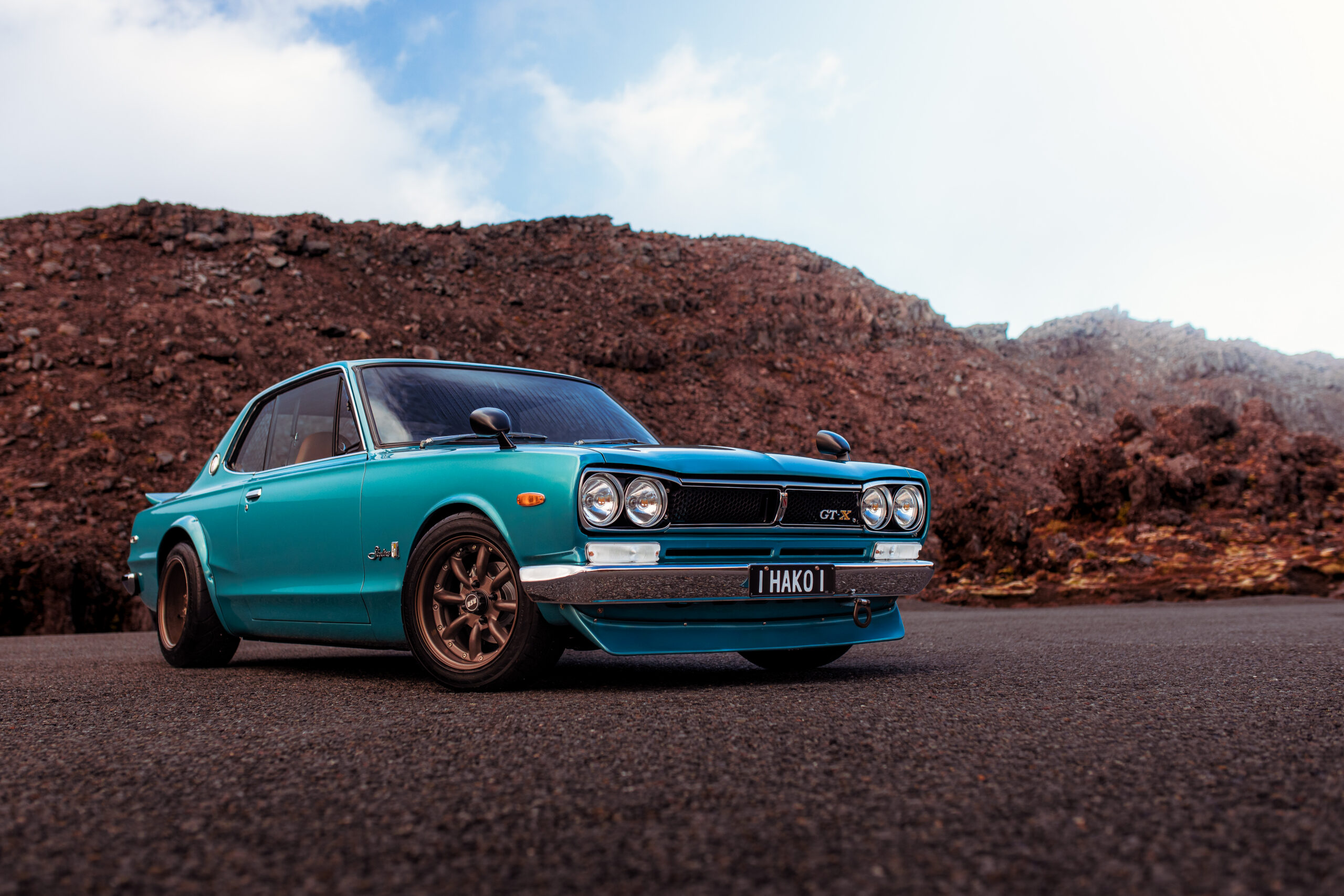
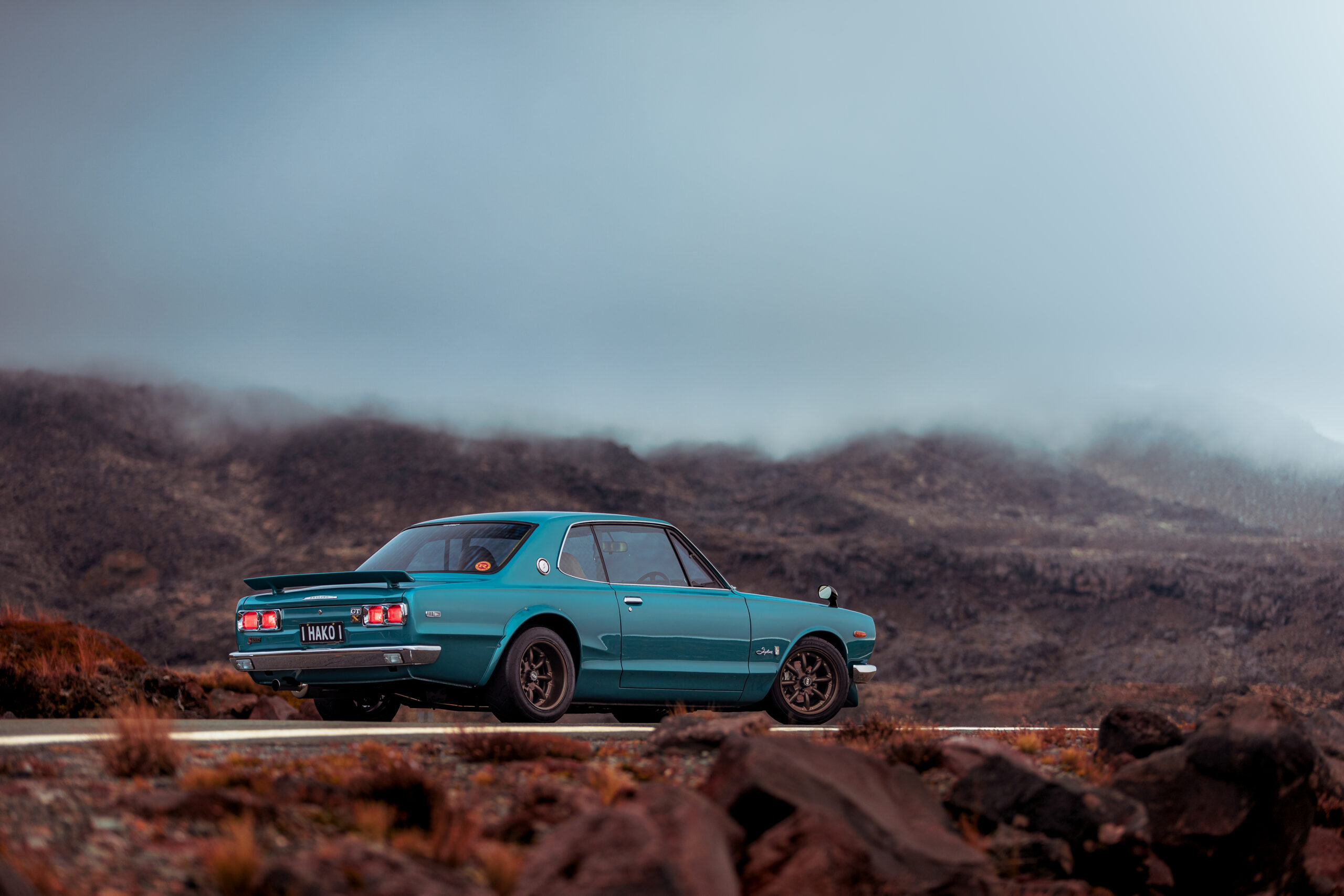
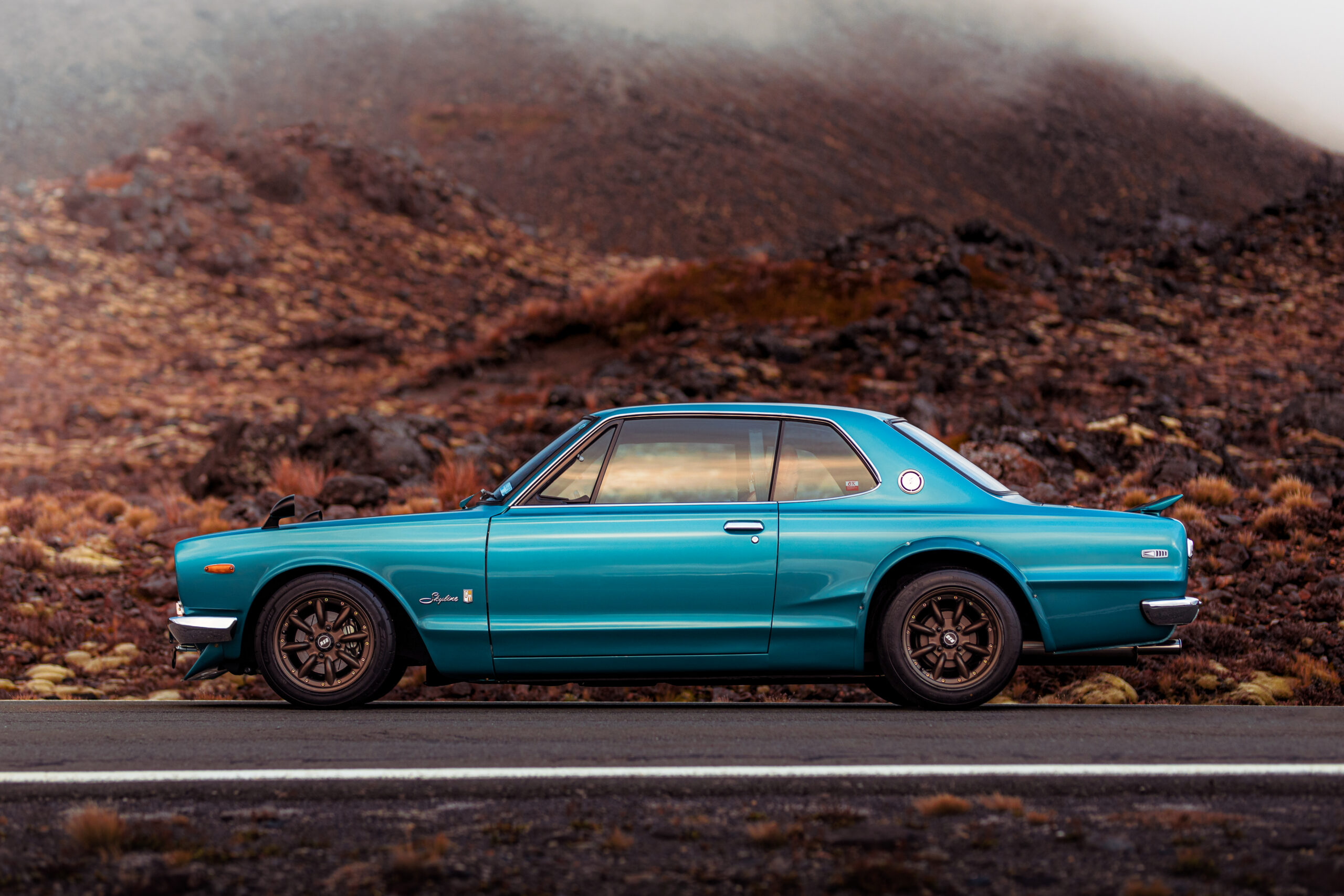
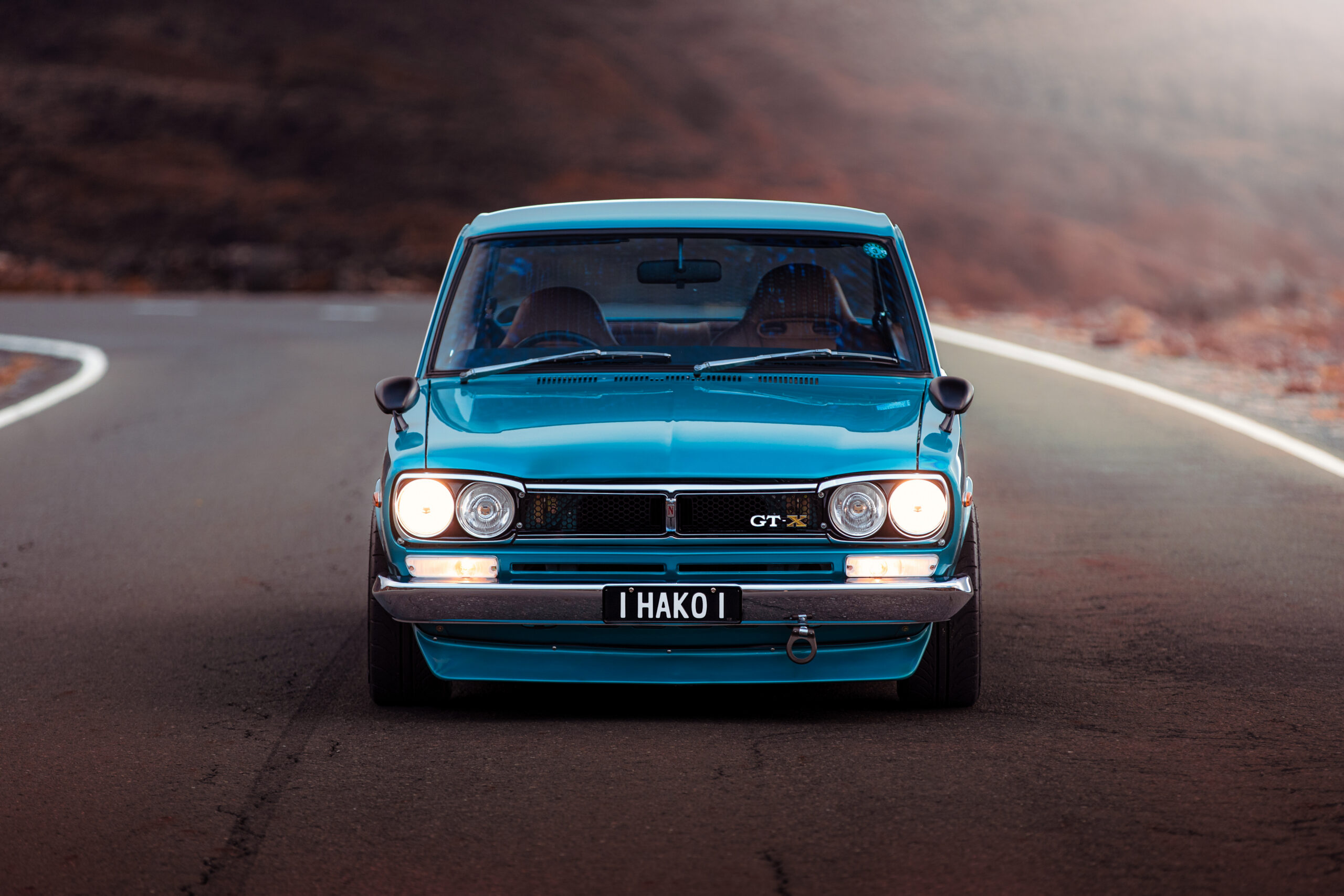
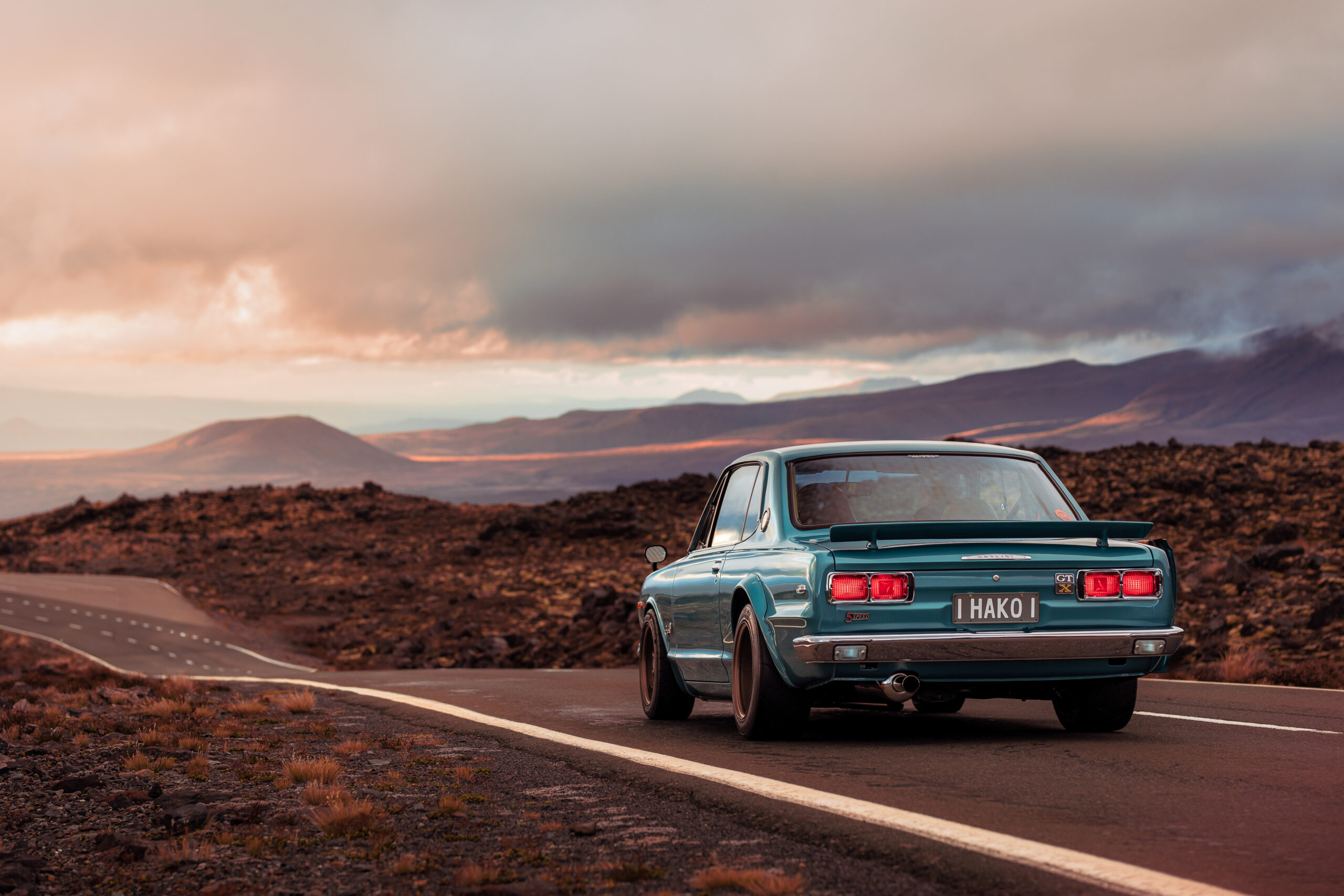
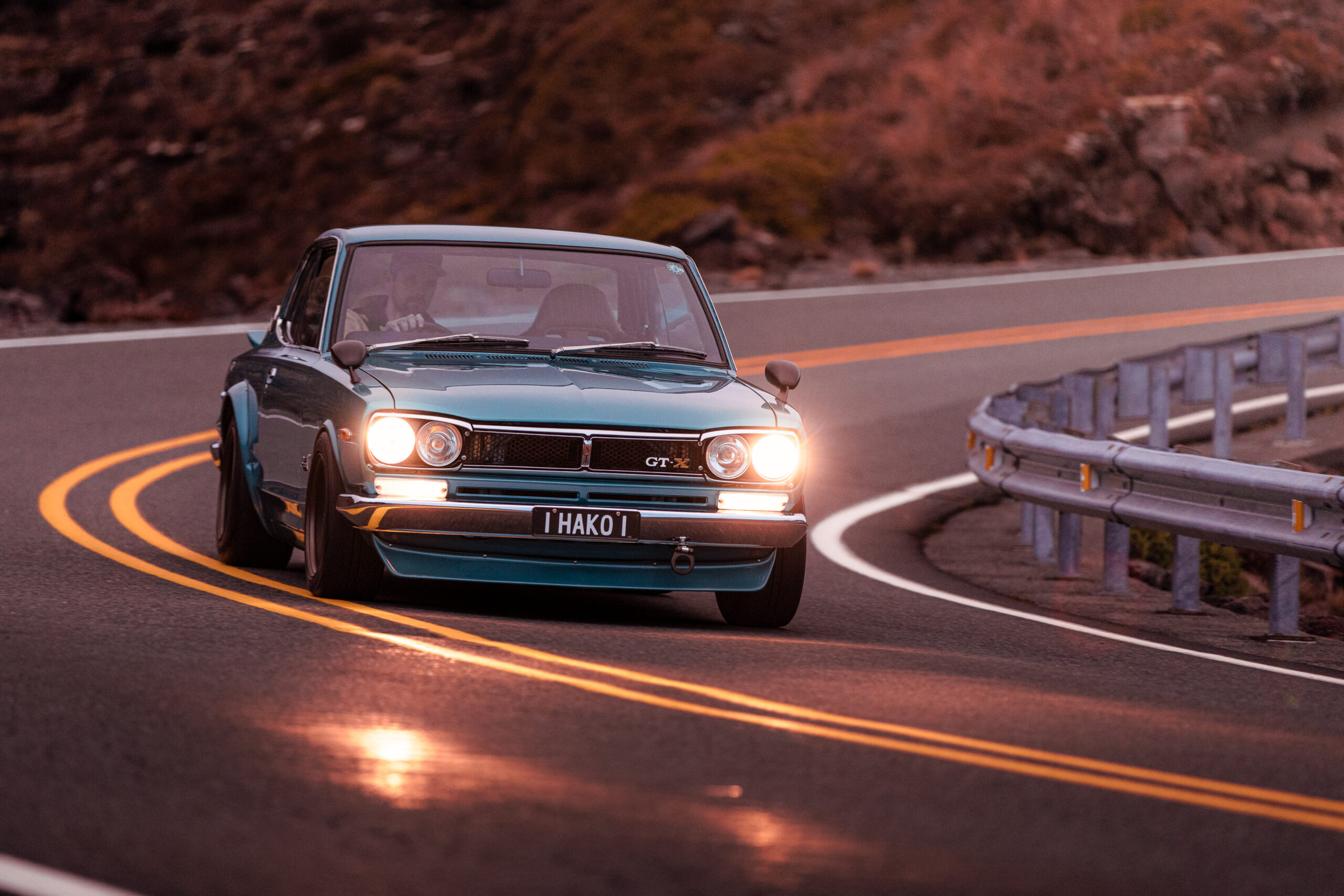
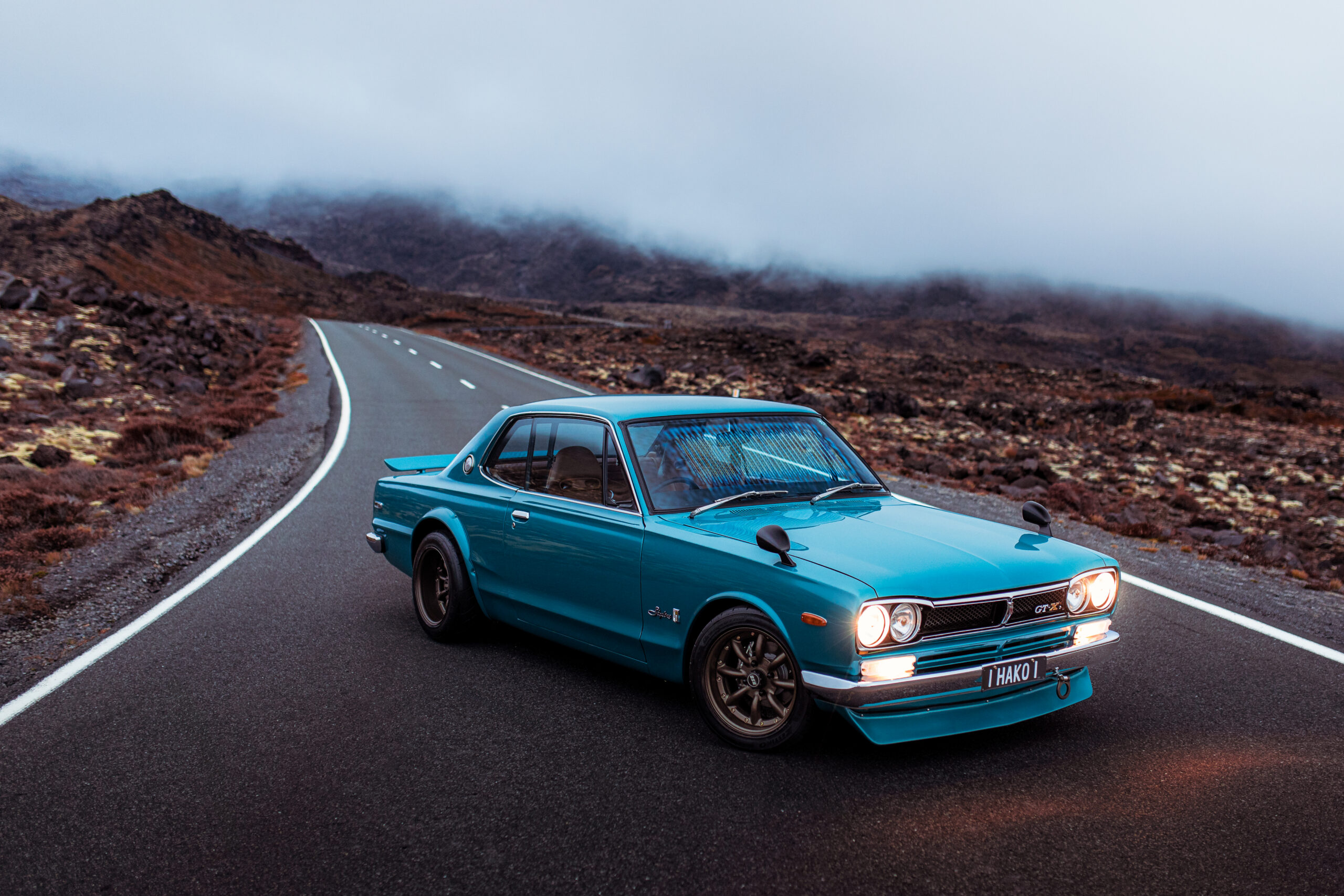
The engine bay’s been shaved, the factory aerial holes removed and the OEM rear ‘surf line’ cut to accommodate GT-R style rear flares. After comprehensive metalwork, including removal of some panels to treat for longevity, Chris flowed a coat of the original blue hue across the ’70s silhouette. It’s striking — a contrast to the usual whites and silvers of Hakosukas — and with a full complement of fresh rubbers and refreshed brightwork, recalls the 1970s in full effect.
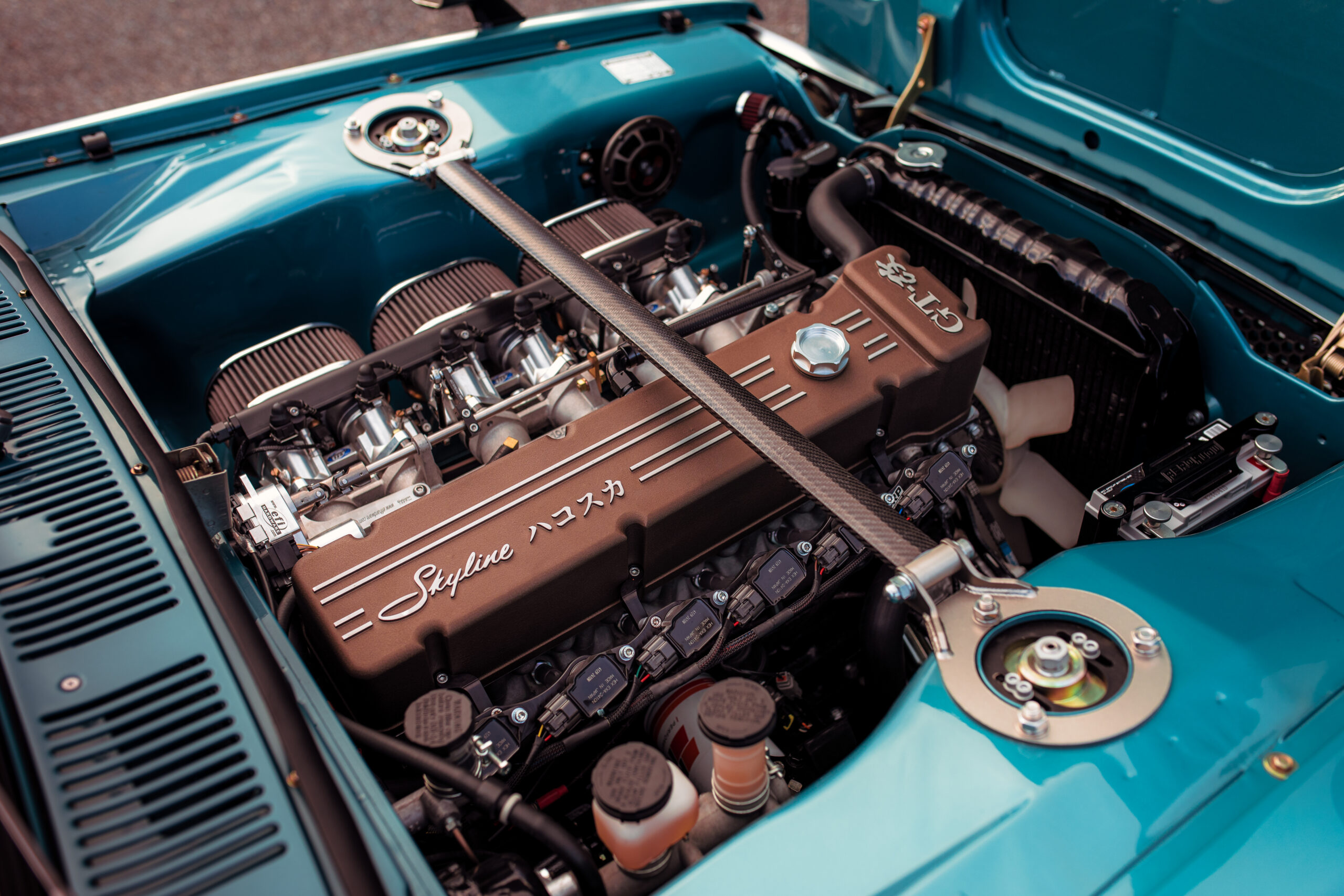
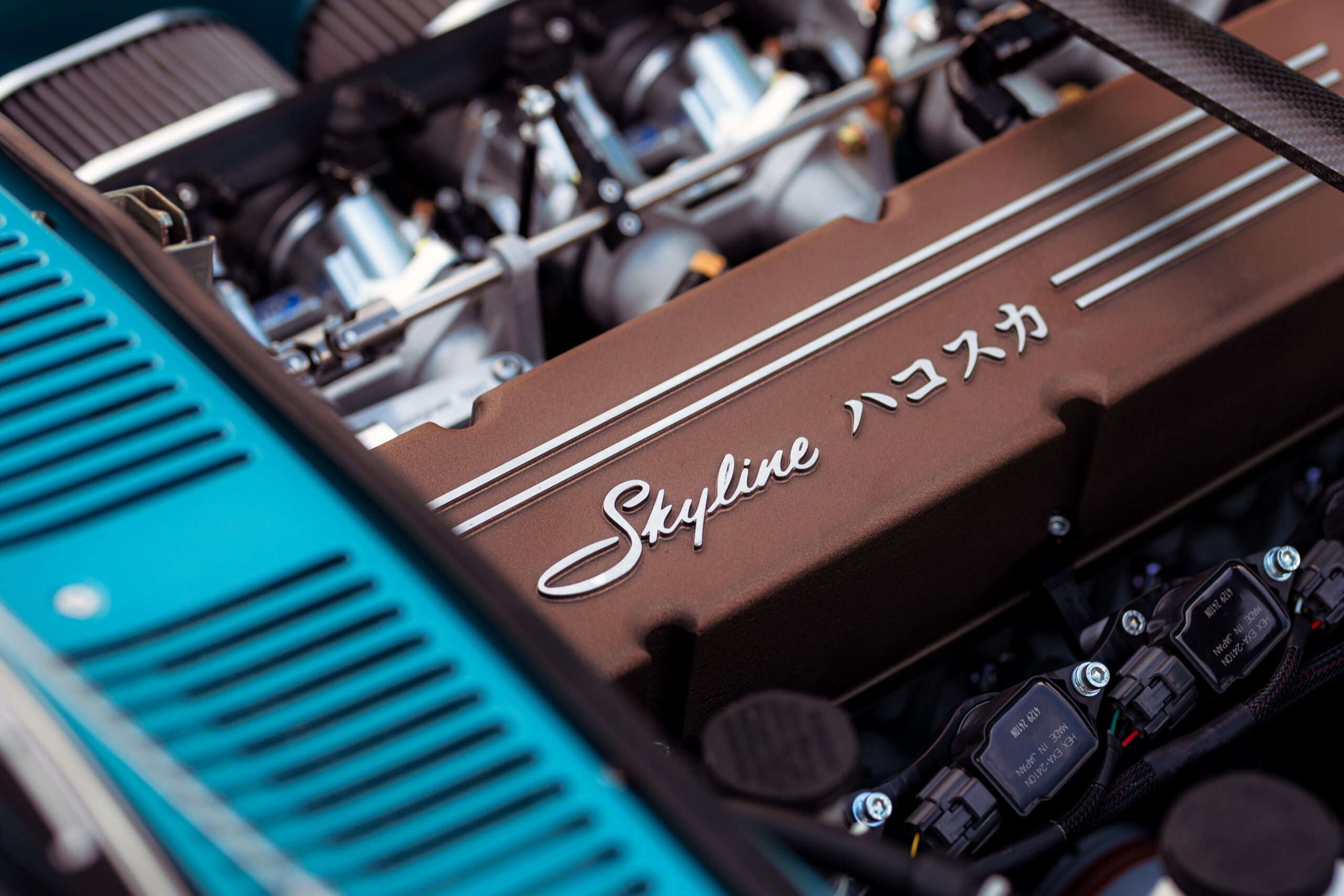
Meanwhile, the engine was dispatched to PPRE in Whanganui for a bit of a spa treatment and a glow up. Electing to retain the original L20 engine, Steve let Gareth at PPRE have a bit of free reign with the project, with Steve’s priorities outlined prior to ripping into it. Despite being better known for rotary antics, the team were keen to have a crack at something different.
The stock-block is topped with a ported and polished head, with a custom cam grind letting the pitchy little six-cylinder breathe. Usually, you’d see a trio of carbs on the side of an old L-series. In Steve’s case, it’s a row of EFI Hardware ITBs. Telling the whole lot what to do is a Haltech Nexus R3 and PD16, programmed and installed by wiring wizard Isaac and the Manawatu Auto Electrical team, along with the rest of the challenging old-car loom. It’s enough to endow the Hakosuka with a respectable 175hp, and hell, it sounds great thundering up the Whakapapa road!
It’s almost a crime not to drape a Hakosuka over a set of RS Watanabe wheels, but in Steve’s case, this comes with a bit of a twist. Not simple the unorthodox colour (that complements the blue perfectly), but these are the three-piece RS-8 version of the classic eight-spoke design. With expertise from Aidan at Pine Engineering, these are now massaged to 15×7-inch and -13 offset out the front, with a hefty 15×9-inch wide rear.
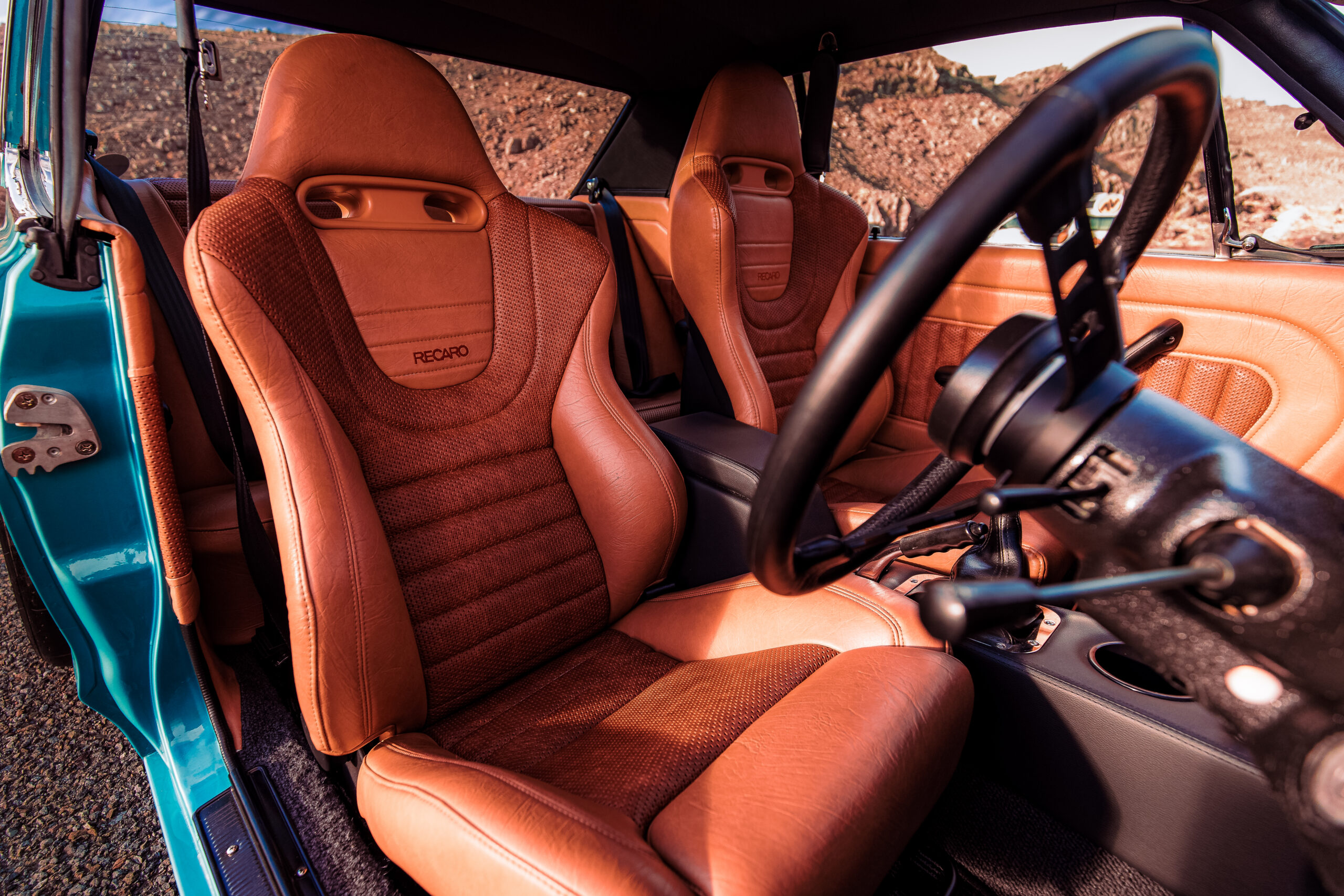
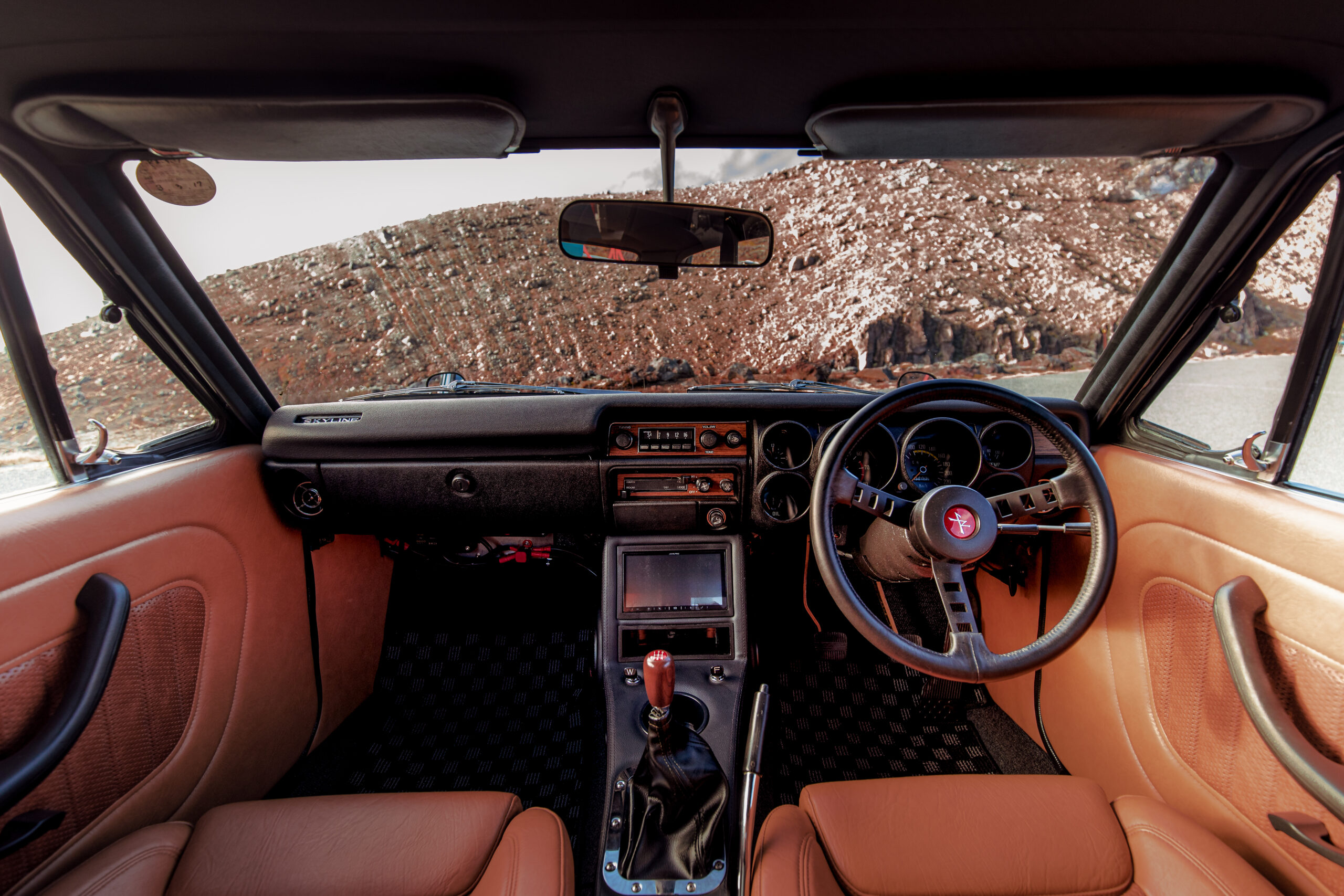
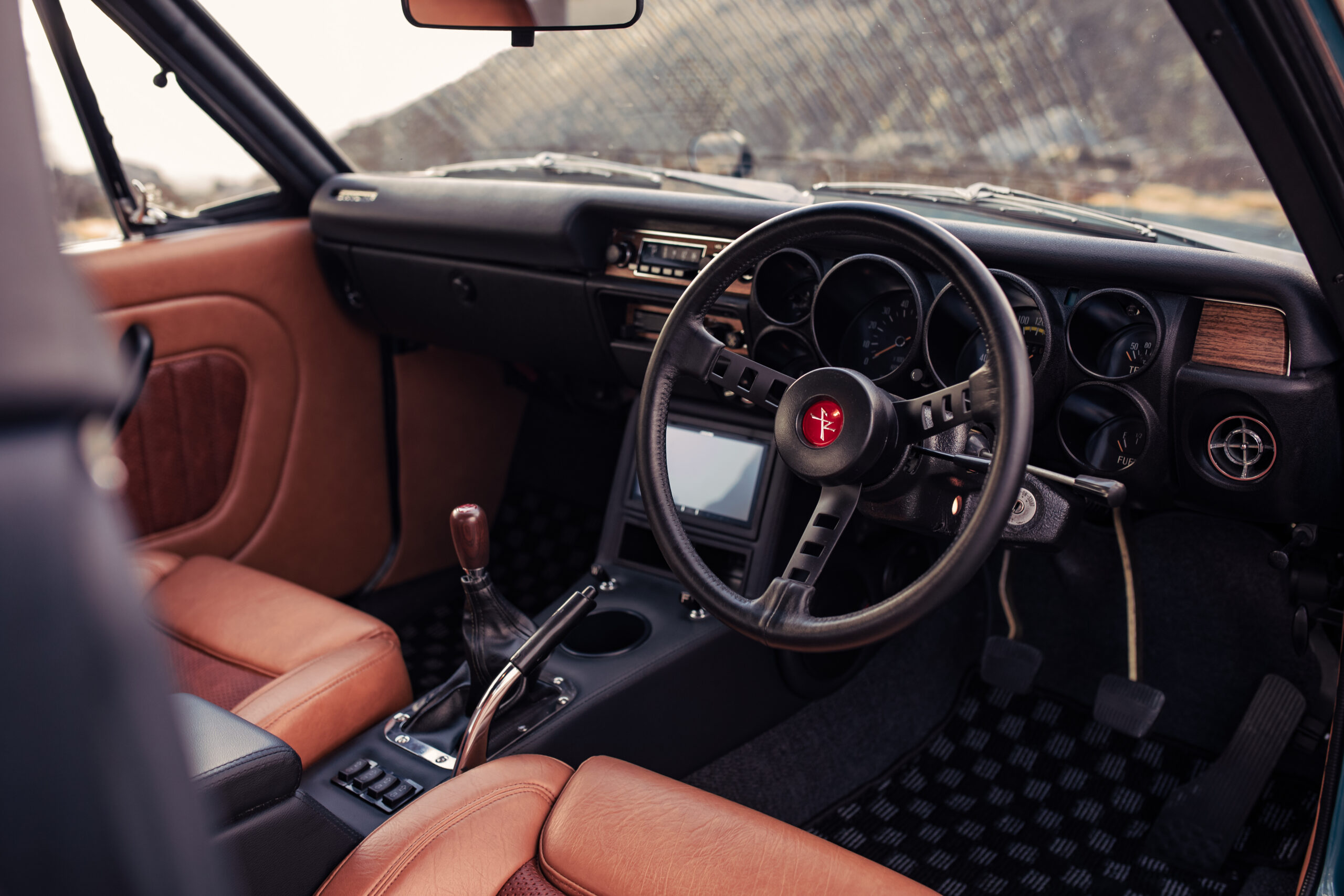
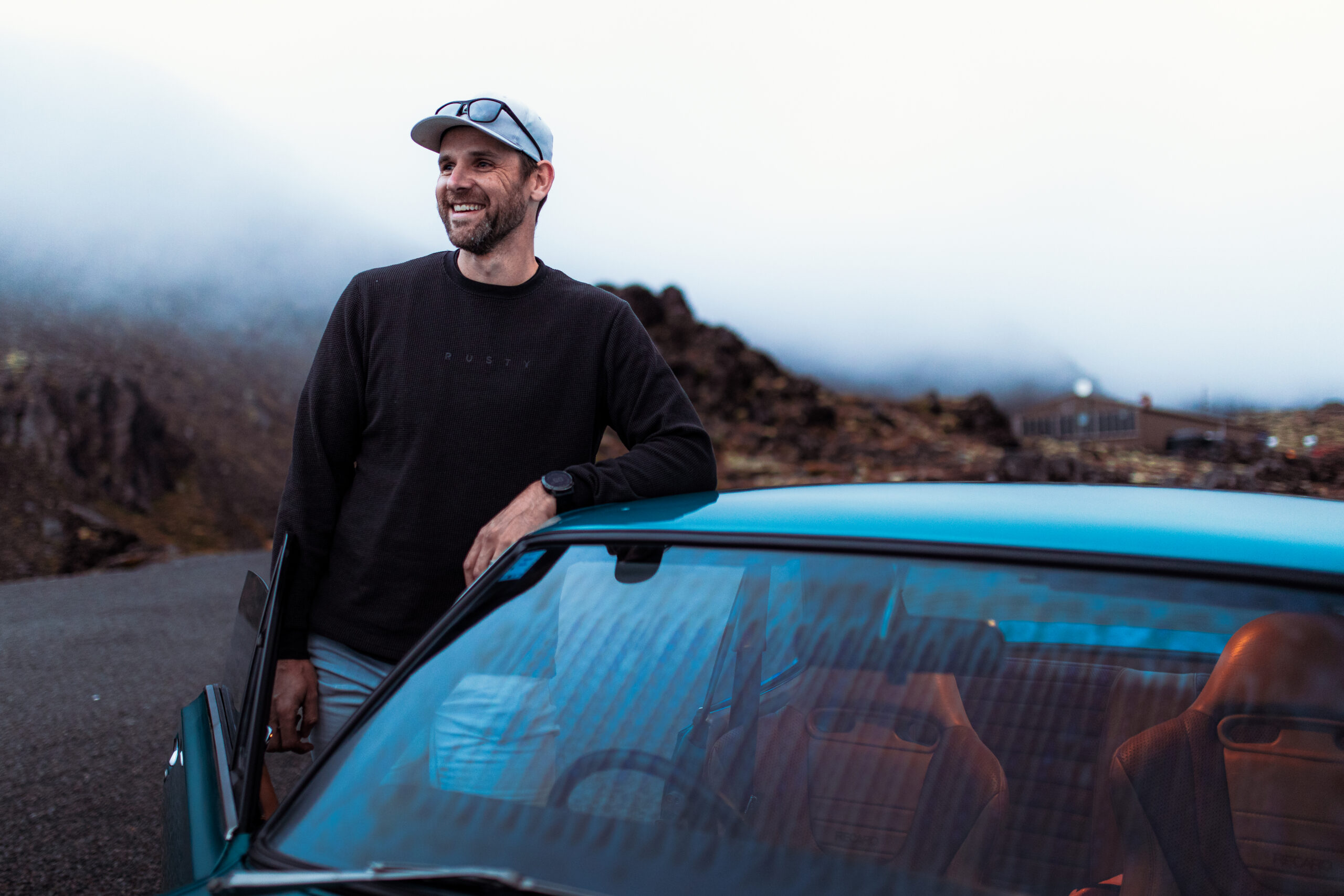
The final big push was the interior, the product of another craftsman, this time the final job for Chris Pocock from Classic and Custom Motor Trimmers. The two-tone leather echoes the Hakosuka’s original tones, but in a much improved genuine leather trim. “I’m grateful for his quality, honesty, and friendship along the way,” beams Steve, and the result speaks volumes. The pair of Recaro SP-JJs can even be swapped out for a trim-matched OEM pair, just in case a more ‘classic’ appearance is desired.
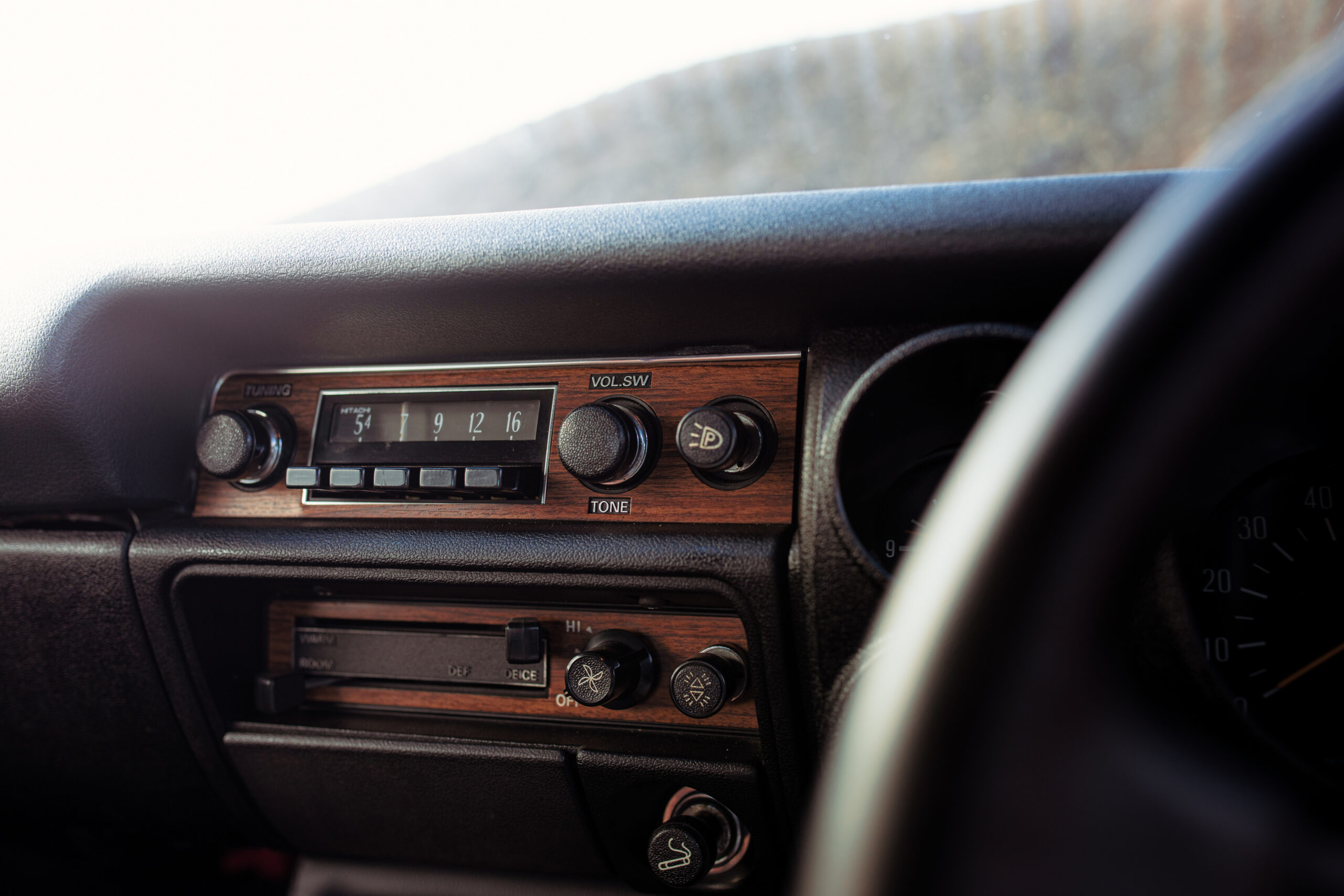
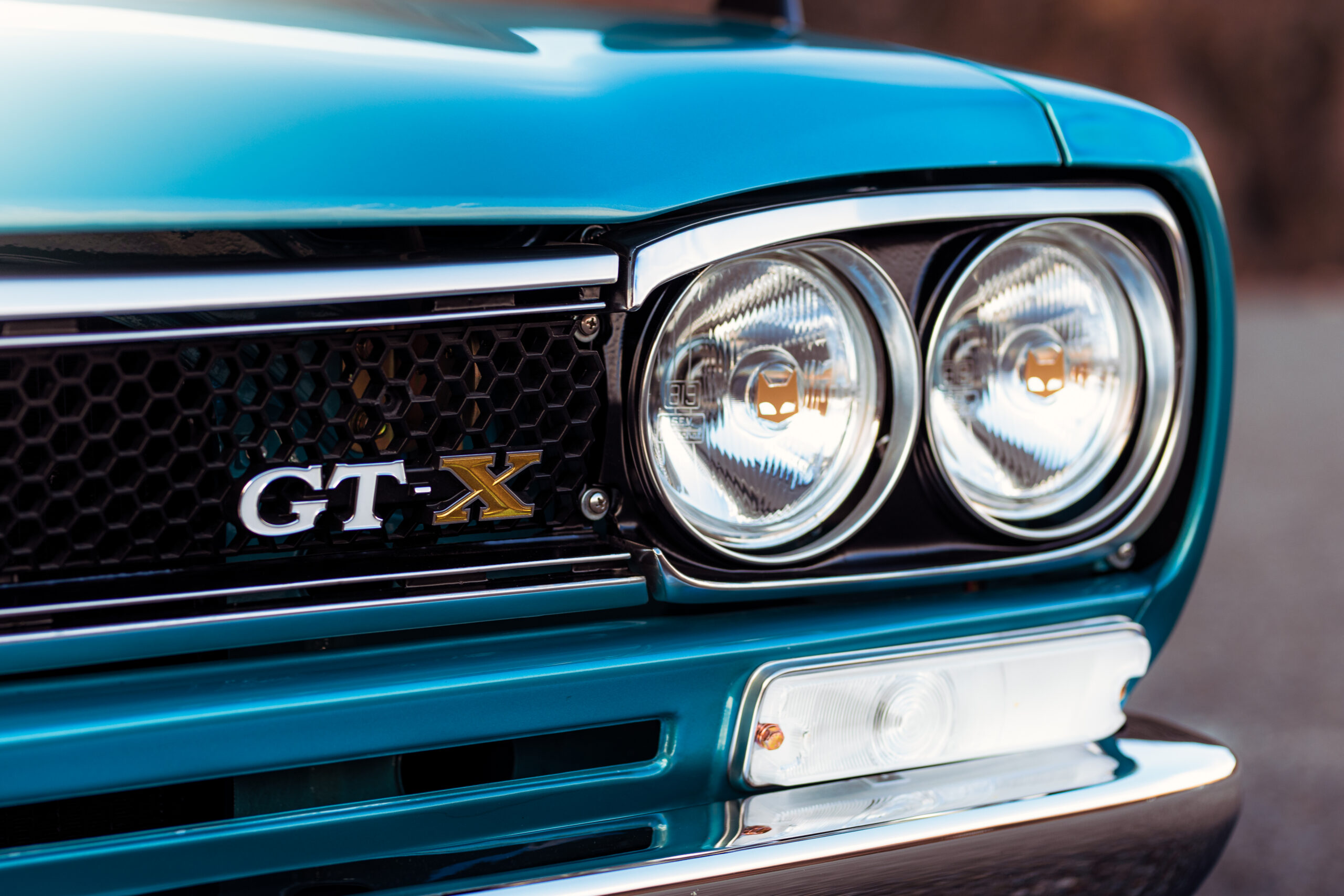
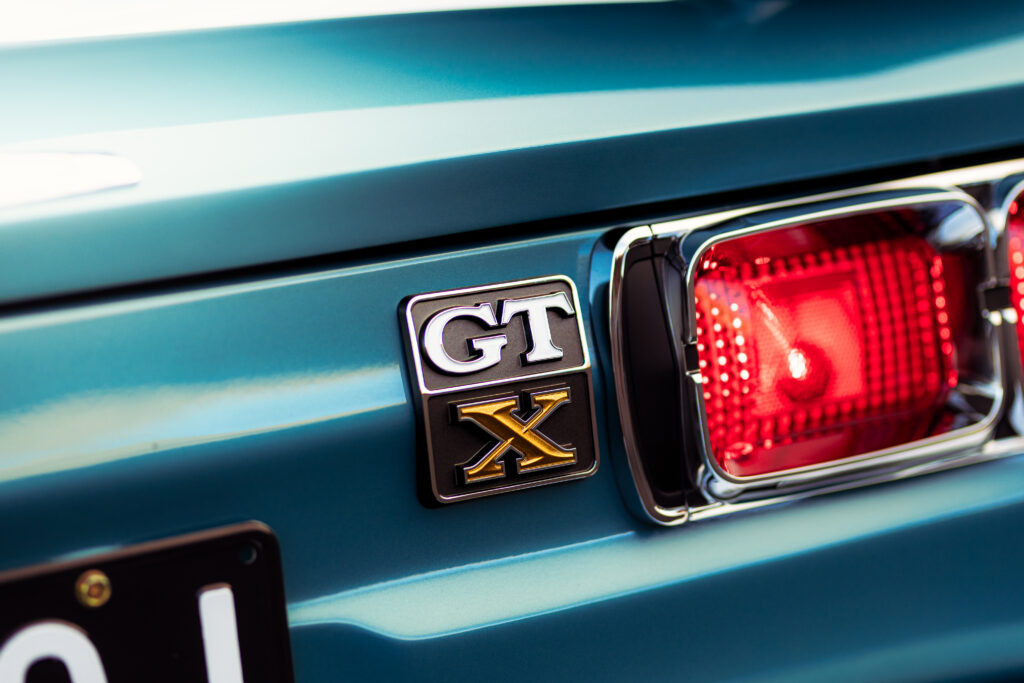
There’s so much more to speak about, but so little page space. Those OEM looking ‘GT-X’ badges, ain’t OEM. They’re the product of a bespoke Japanese service, 3D printed and hand-finished. The Marchal semi-sealed headlamps scream authentic JDM, as does the Nissan Competition–style steering wheel. It’s a build that rewards close inspection and rewards the trainspotters and purists among us — that Prince Sports Corner decal on the rear screen will get a few frothing.
This is proof that there’s life outside the usual Skyline boxes, and it’s spectacular. Steve’s Skyline is a monument to Nissan history, and an exhibition of Kiwi tuning craftsmanship. It’s testament to creating a road map and sticking to it. And it’s not just another R32. The Hakosuka is here, folks, and we reckon you absolutely need to check this one out next time Steve’s out and about.
SPEC LIST
Heart
ENGINE: L20, 2000cc six-cylinder
BLOCK: Factory, custom-grind camshaft, custom rocker cover
HEAD: Factory, ported and polished
INTAKE: Triple-carb drive-by-wire individual throttle bodies (ITBs), Pro Series linkages, Pro Series ram tubes, EFI Hardware inlet manifold, K&N air filters, e-throttle
EXHAUST: Custom six-into-one equal-length manifold, six-into-one stainless exhaust collector, full 2.5-inch stainless exhaust into centre and rear muffler.
FUEL: Custom intake fuel tank, EFI Hardware individual throttle body (ITB) electronic fuel injection, billet aluminium fuel rail,
IGNITION: EFI Hardware R35 GTR coil setup, electronic distributor
ECU: Haltech Nexus R3
EXTRA: Smoothed engine bay, all holes welded, Haltech PD16 power distribution model (PDM), electronic distributor
Drive
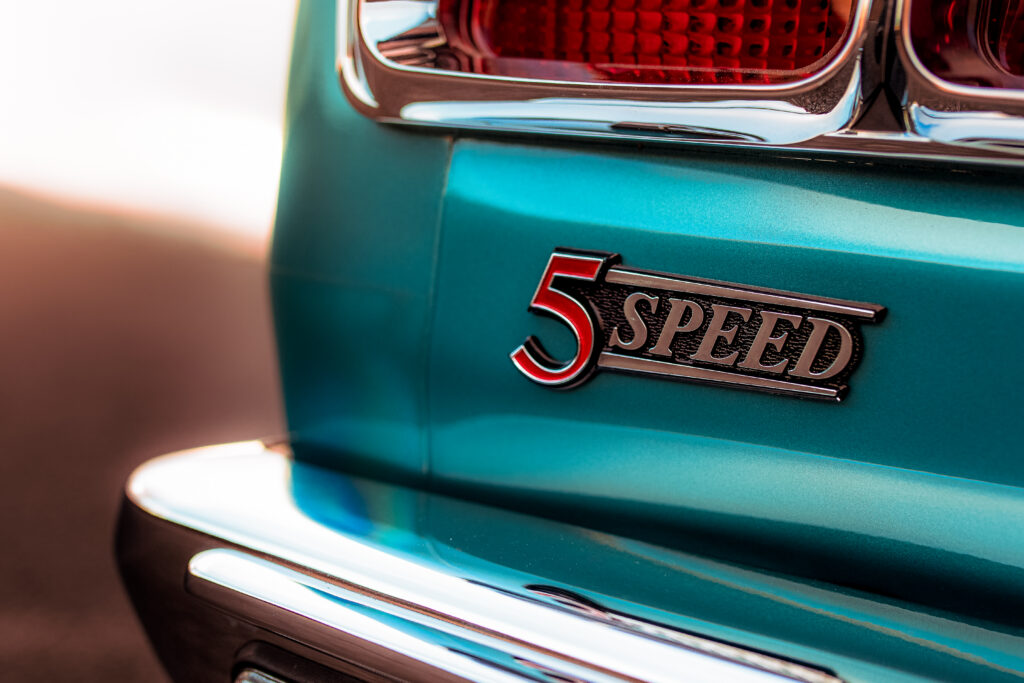
GEARBOX: Factory five-speed
CLUTCH: Heavy-duty
FLYWHEEL: Lightened flywheel
DIFF: Custom 4.4 R180
Support
STRUTS: Custom Speedfactor XYZ adjustable coilovers,
BRAKES: (F) Sumitomo MK63 four-piston callipers, rotors and pads (R) Factory drums, rebuilt cylinders, resurfaced shoes
ARMS/KNUCKLES: Factory
EXTRA: Independent rear end, adjustable rear sway bar, Techno Toy Tuning adjustable tension control rods, ZGarage CV axles.
Shoes
WHEELS: (F) 15×7-inch (+13) (R) 15×9-inch (+6) Watanabe RS-8
TYRES: (F) 195/50R15 Zestino Gredge 07RS (R) 245/45R15 Zestino Victas ZS01
Exterior:
PAINT: Factory Nissan blue
ENHANCEMENTS: Flared rear guards, front chin spoiler, chrome hood centre trim removed
Interior
SEATS: Factory seats reupholstered
STEERING WHEEL: Factory steering wheel
INSTRUMENTATION: Factory
EXTRA: Custom centre console
ICE: Factory radio, Alpine iLX-W660E head unit, MTX Audio TX4 series four-inch coaxial front speakers, MTX Audio TX6 series four-inch coaxial rear speakers, custom audio-wiring loom
Performance:
POWER: 106kW at the wheels
FUEL TYPE: 98 Octane
TUNER: Pulse Performance Race Engineering
Driver Profile:
DRIVER/OWNER: Steve Radich
AGE: 39
LOCATION: Manawatu
OCCUPATION: Financial Adviser
BUILD TIME: 14 months
LENGTH OF OWNERSHIP: Two years
THANKS: A huge thank you to my family — Allanah, Lil, and Bensen — for their support throughout the journey. Massive appreciation to Chris Calder from Classic & Restoration Services, Gareth Lewis at Pulse Performance Race Engineering, Isaac Probert of Manawatu Auto Electrical, Chris Pocock from Classic & Custom Motor Trimmers, Jared Parker at Zestino Tyres, Jamel from FNLHVN (Final Heaven) in Japan, Glen Fage of Elite Powder Coaters, Graham at Electroplating Manawatu, Matt Tasker from Dannys Auto Services, Terry Price, Pete from Autolign Palmerston North, and Hayden Koolen from Precision Auto Painters.
_________________________________________________________________________________________________
This article originally appeared in New Zealand Performance Car issue 314