



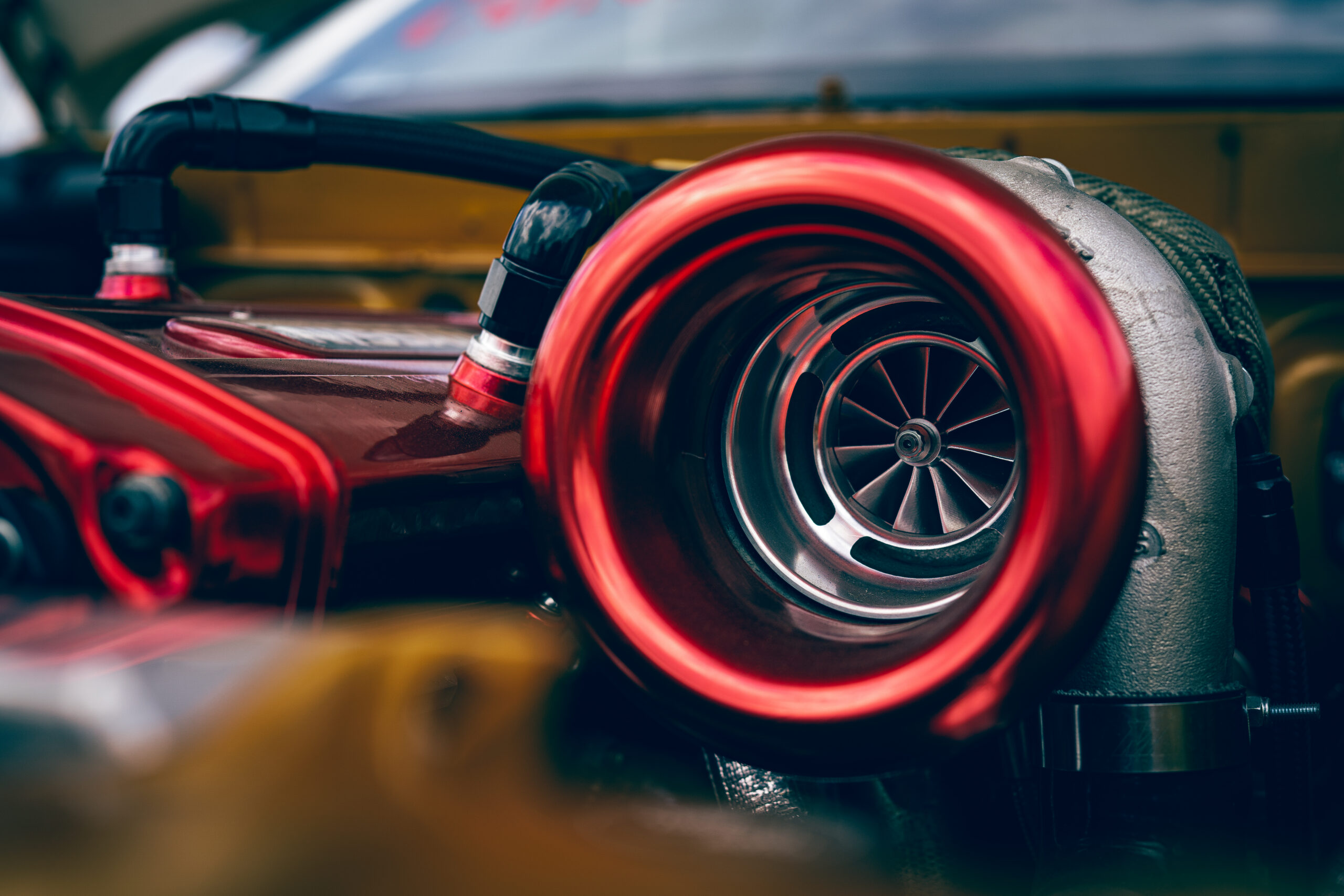
For someone new to turbocharged engines, why does a turbo put more demand on oil than an NA setup?
A turbo asks your oil to do two jobs at once. On top of lubricating pistons, rings, and bearings, it also has to cool and lubricate a turbine shaft spinning at extreme speed, with nothing but a thin oil film between it and failure. Forced induction also increases cylinder pressure, which increases blow-by past the rings, meaning more combustion byproducts end up in the oil over time. So it’s not just hotter, it’s working harder and getting dirtier faster.
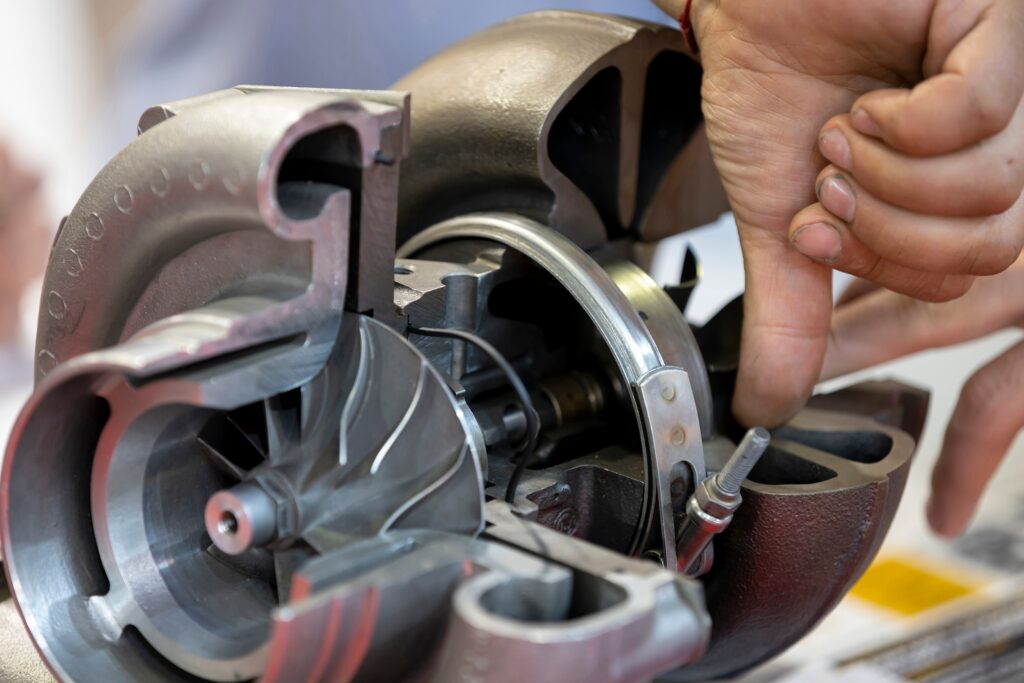
Turbo bearings are oil-fed and sit at extreme temperatures — what does that mean for oil type and viscosity?
This is the part people often underestimate. While the crankcase might sit around 104°C, the turbo bearing housing can exceed 200°C, so oil that’s fine protecting your crank can still struggle at the turbo. That’s why turbo applications need oil with real thermal stability, not just the right number on the bottle.
On viscosity, the instinct to “go thicker for safety” is actually backwards. Running oil thicker than specified can restrict flow through the turbo’s tight oil passages, which is worse than using the manufacturer-specified grade. The spec in your handbook exists for a reason, match it, don’t outsmart it.
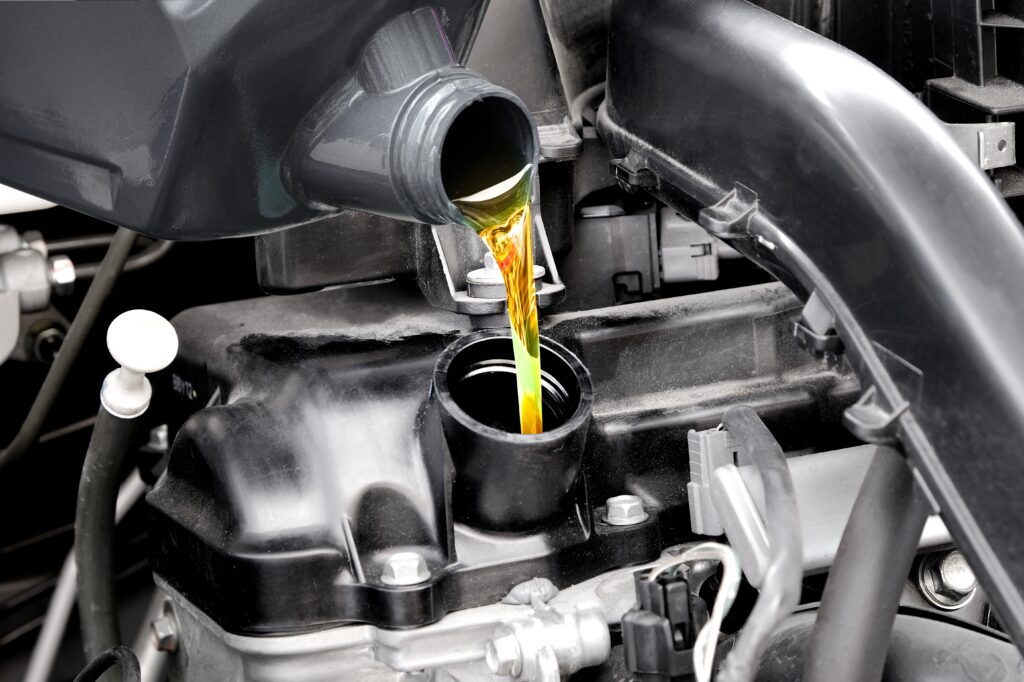
Full synthetic vs semi-synthetic for turbo applications — is full synthetic always the answer?
For anything modified, high-boost, or driven hard, full synthetic isn’t really optional. Conventional oil lacks the thermal stability turbo temperatures demand and can break down into carbon deposits that damage turbochargers over time.
For a mild, factory-spec turbo driven gently around town, a quality semi-synthetic meeting manufacturer spec can get the job done, but you’re working with less margin. The honest answer is it depends on how hard the engine is working, boost level, heat soak, and driving style all shift that line.
This is exactly what the oil selector on oilhub.co.nz is for: pop in your rego and we’ll match you to the right product for your engine instead of guessing on the shelf.
Should turbo engines be on a shorter service schedule than NA?
Generally, yes. Factory service intervals are often written assuming gentle, ideal conditions. A turbo engine running regular boost is under more stress than that assumption accounts for.
There’s no universal number because it depends on the engine and how it’s driven, but the rule of thumb is: when in doubt, go shorter rather than stretching intervals to match an NA equivalent.
Should trackday or weekend-spirited drivers treat their schedule differently to daily-driven turbo cars?
Definitely. A trackday at places like Ruapuna or Highlands puts sustained high oil temperatures, heavier load cycles, and increased blow-by on the oil in a way a daily commute never will. That accelerates oxidation and shear.
Don’t wait for your normal interval after a hard track session. Treat that day as its own event. Many serious owners change oil straight after rather than folding it into the next scheduled service, and it’s a habit worth adopting if you track regularly.
Are turbo timers and cool-down idles still necessary with modern oils and turbos?
Less necessary than they used to be, but not entirely outdated. Water-cooled turbos need much less cool-down because the bearing area doesn’t get nearly as hot, and most modern turbos on NZ roads are water-cooled.
That said, a short idle after a hard run is still cheap insurance. Letting the engine idle for 30 seconds to a minute helps the turbo shed heat and reduces the risk of oil coking, particularly on older or oil-only-cooled setups still common in the JDM import scene.
A dedicated turbo timer is more of a convenience than a necessity now, the habit matters more than the hardware.

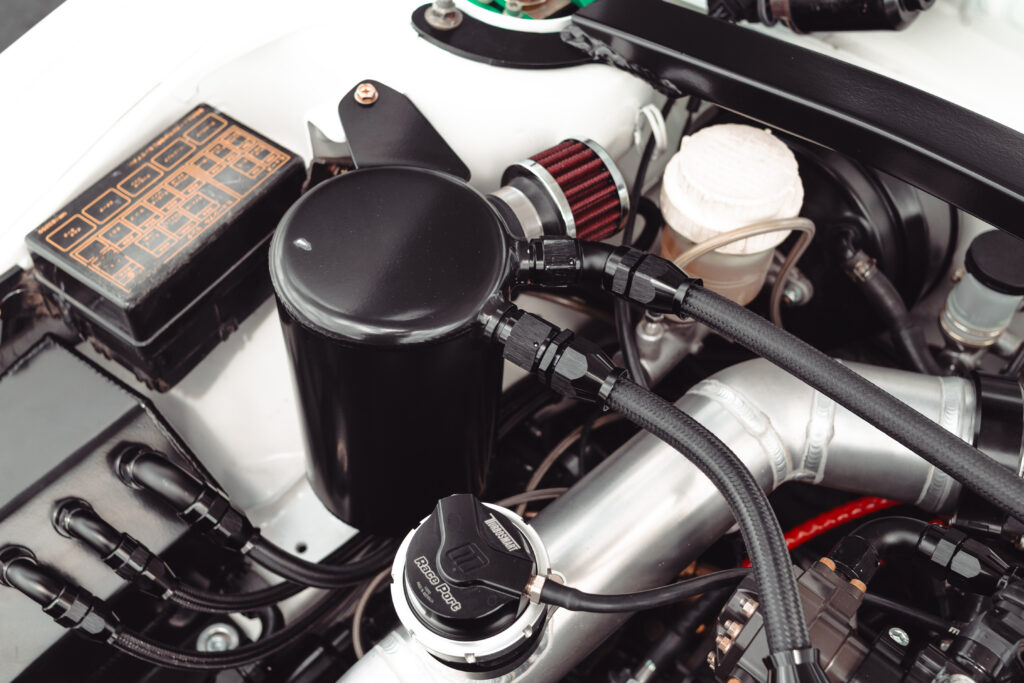
Do oil catch cans actually reduce strain on your oil, and should turbo owners run one as standard?
Worth being precise here, because this gets misunderstood a lot. A catch can doesn’t really protect the oil in your sump. What it does is intercept oil vapour and mist from the crankcase breather system before it’s pulled back through the intake, helping reduce carbon buildup on intake valves, throttle bodies, and sensors.
For modified or high-horsepower setups, a vented catch can can significantly reduce oily air entering the intake, which is valuable, just not because it extends your oil change interval. For a heavily boosted or track-driven car, it’s a smart supporting mod. For a mild stock turbo daily, it’s optional rather than essential.
Your oil is still doing the heavy lifting either way, which is why choosing the right oil from the start matters more than anything bolted to the firewall.

Should a serious turbo build run an oil pressure gauge, and what should you watch for?
Yes. If you’re serious about a turbo build, a mechanical oil pressure gauge is one of the cheapest insurance policies you can add. Turbo bearings have zero tolerance for oil starvation, and a factory warning light often only comes on after damage has already started.
What to watch for: pressure that’s slow to build on cold start (especially on a Canterbury winter morning), pressure that drops lower than normal at hot idle, and any sudden drop under load or mid-corner.
None of those are dramatic on their own, but catching them early can be the difference between a quick fix and a dead turbo.
_______________________________________________________________________________________________________
OilHub is live at oilhub.co.nz — enter your plate, get your match, and have it at your door before the weekend.