




Words and Photos: Richard Opie
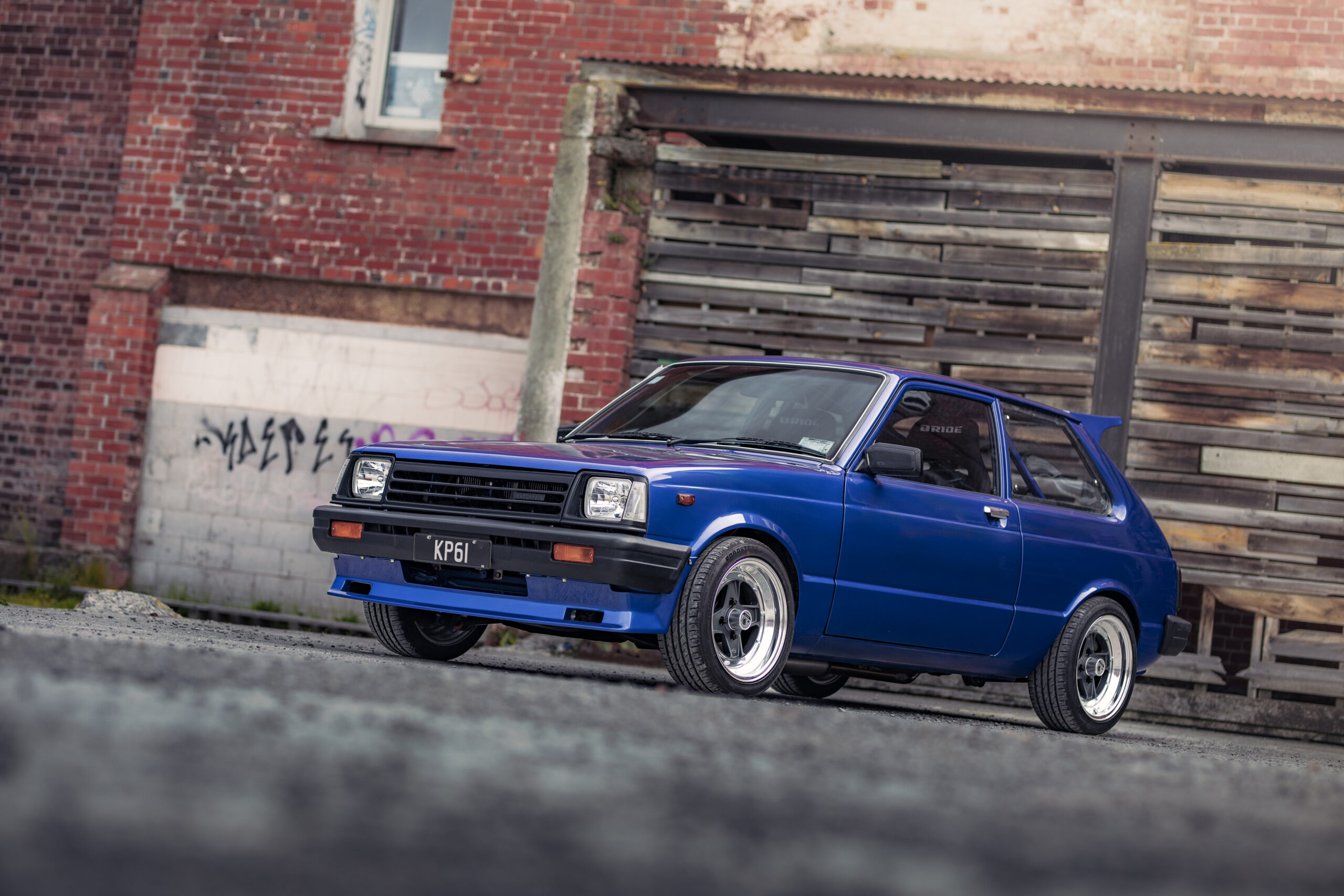
“Maaaaate, it’s like driving a bloody go-kart!” We’ve all heard this yarn. It could be your uncle’s best mate Gerald spinning a tall tale about his Mark 3 Cortina he threw a set of ‘fats’ on in the early eighties, or an upper-middle manager at [insert large corporate here] boasting about the way his SS Commy sticks like the proverbial turd to a blanket when being punted through a moderately twisty road.
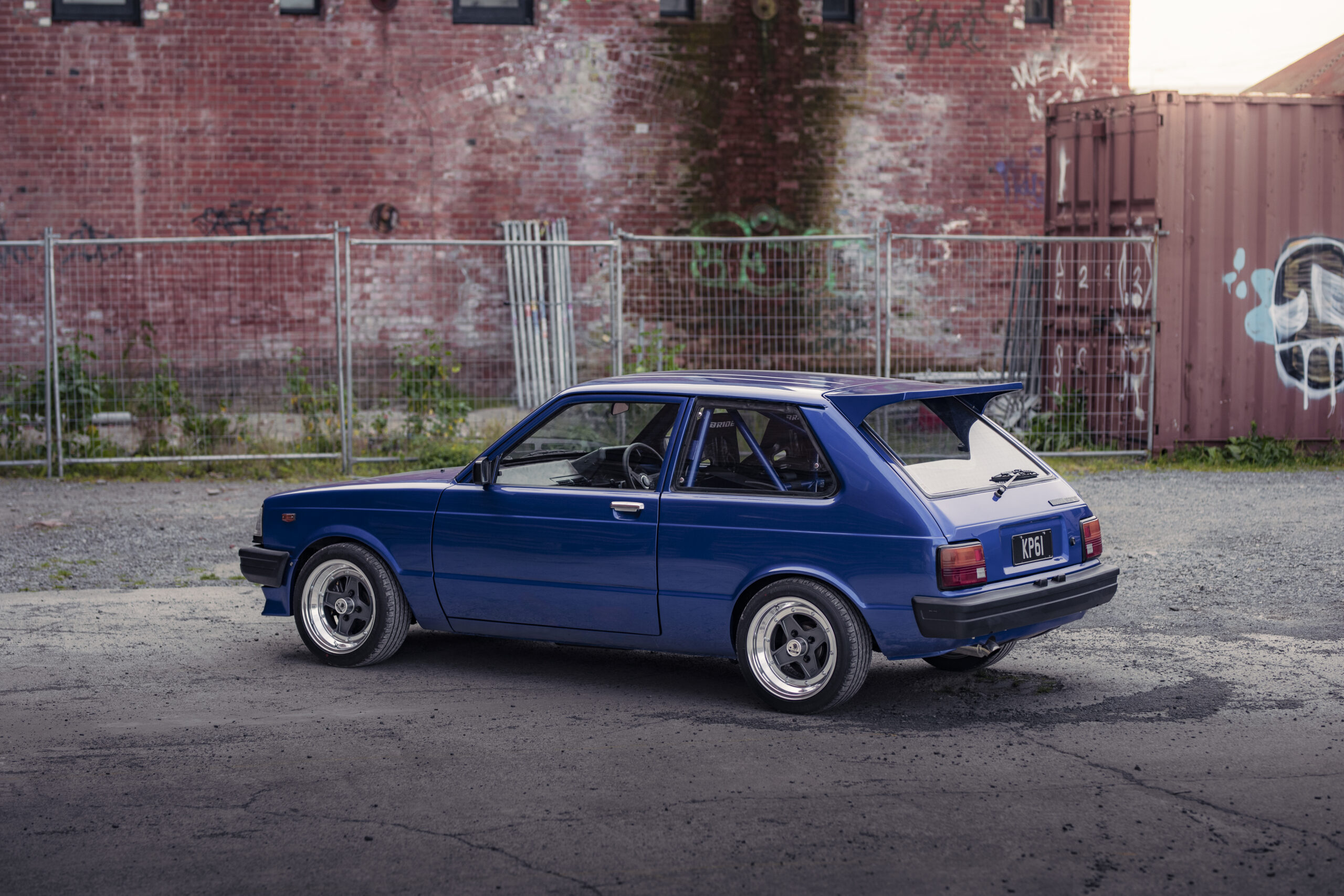
If anything, the old ‘go-kart’ trope is a bit overused, perhaps a bit misinterpreted.
Think about it, the clue’s in the term. Go-karts sure ain’t dull four-door sedans, they’re not encumbered with all manner of luxurious appointments, and they absolutely don’t lean on an array of driver aids to mask the bloat of power-adders, complex drivetrains, and dynamics compromised in the name of ‘mass production’.
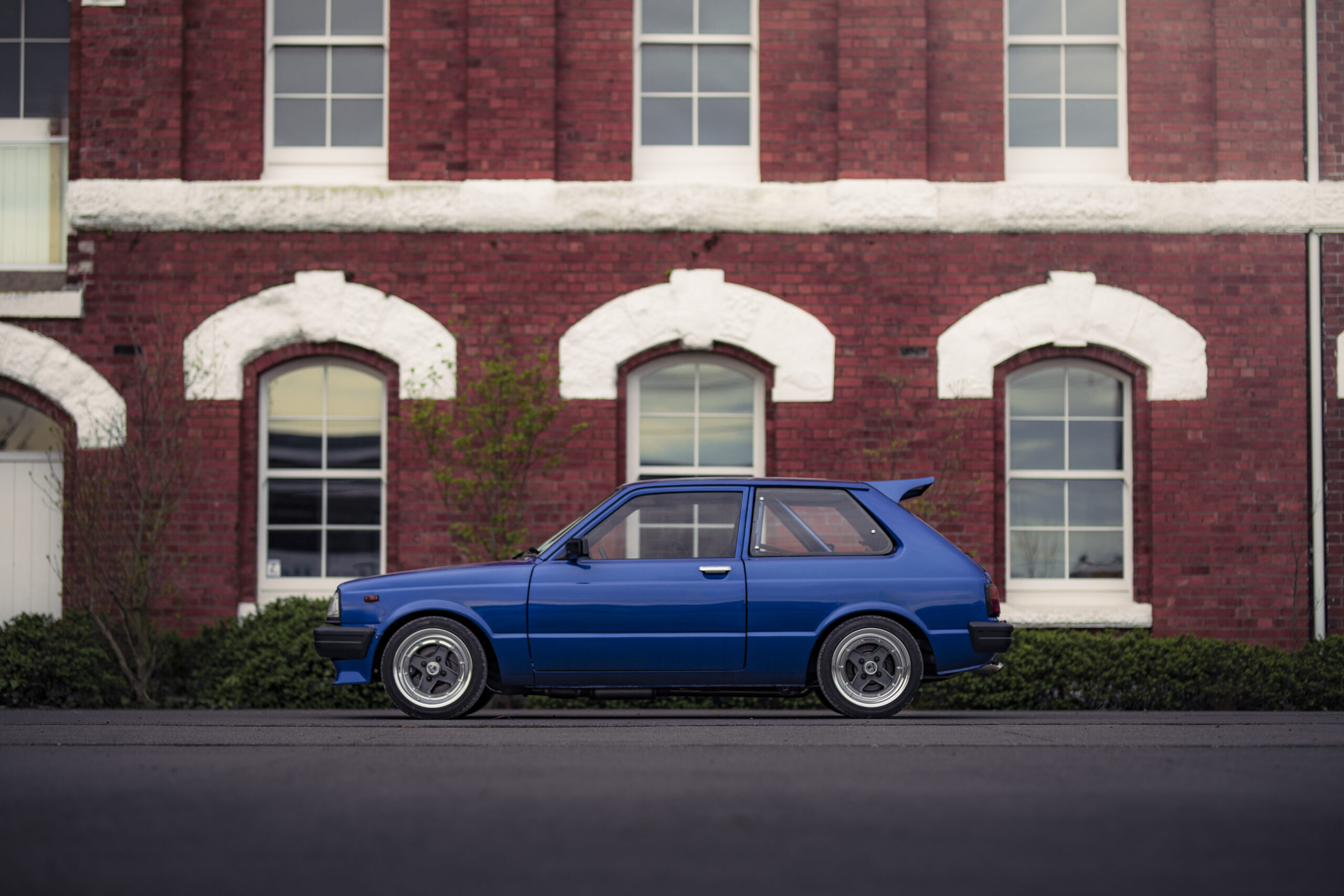
It’s about stripping the driving experience back to the visceral basics. Grip, power, noise and fun in equal measure. Bare-bones motoring, with an emphasis on feel and balance rather than outright numbers. In 2025, it’s pretty much a nostalgic notion. This means a nostalgic platform is surely best to get that go-kart impression in a full-size car? Lightweight, rear-wheel–drive, and a perky, naturally aspirated powerplant. These are three of the key ingredients that have gone into the mixer to create Logan Martin’s lithe KP61 Toyota Starlet, a platform arguably better suited than any to earn the ‘go-kart for the road’ title.
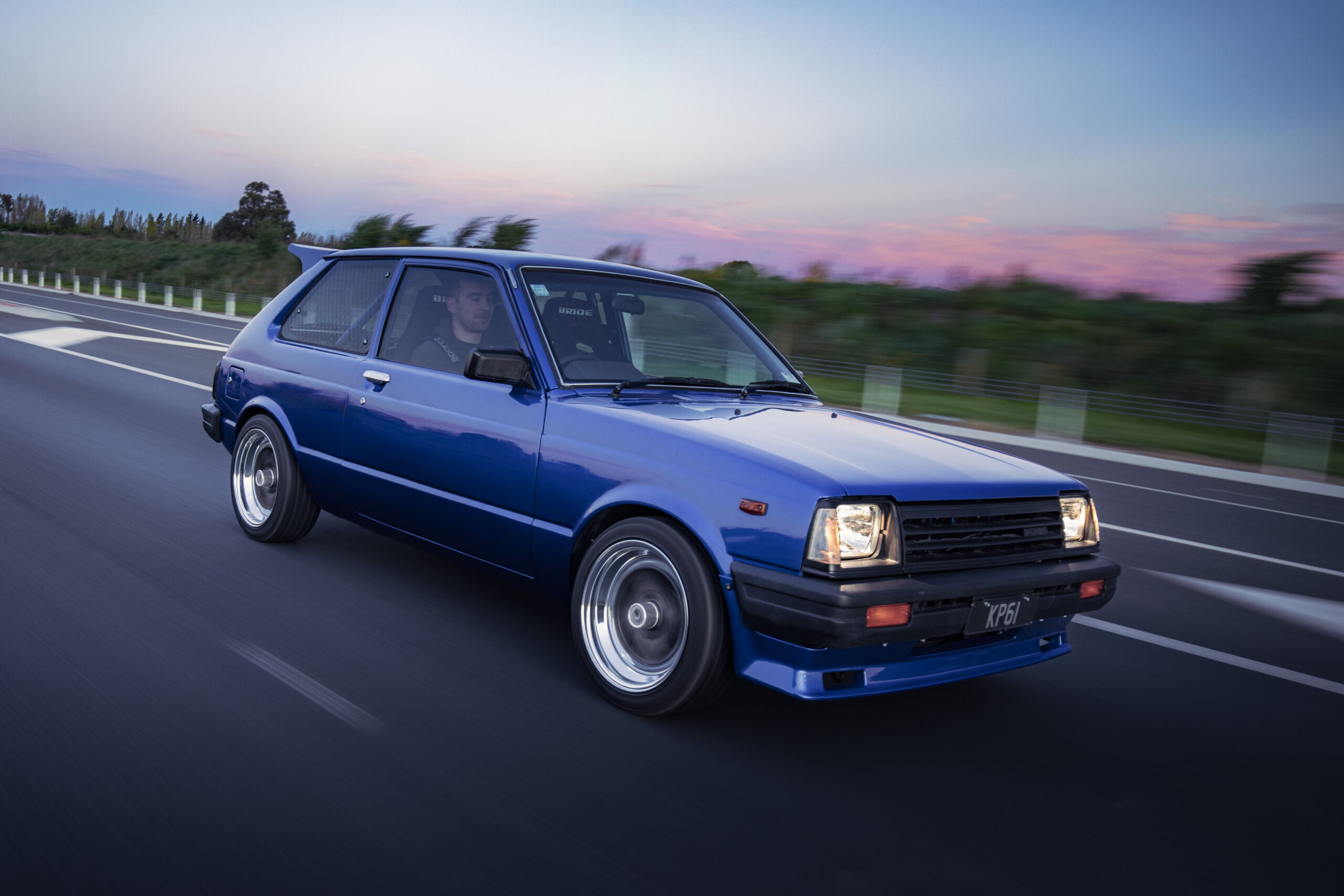
Those first couple of tasty treats already fall in favour of Toyota’s diminutive early-eighties hatchback. Sure, when Nana was buying these things to grab a bundle of produce on a Tuesday, and nip down to the parish on a Sunday, they probably didn’t really matter. All she wanted was that K-series engine to clatter into life dependably, sipping fuel as it did so, and slot it easily into a parking space at Woolies.
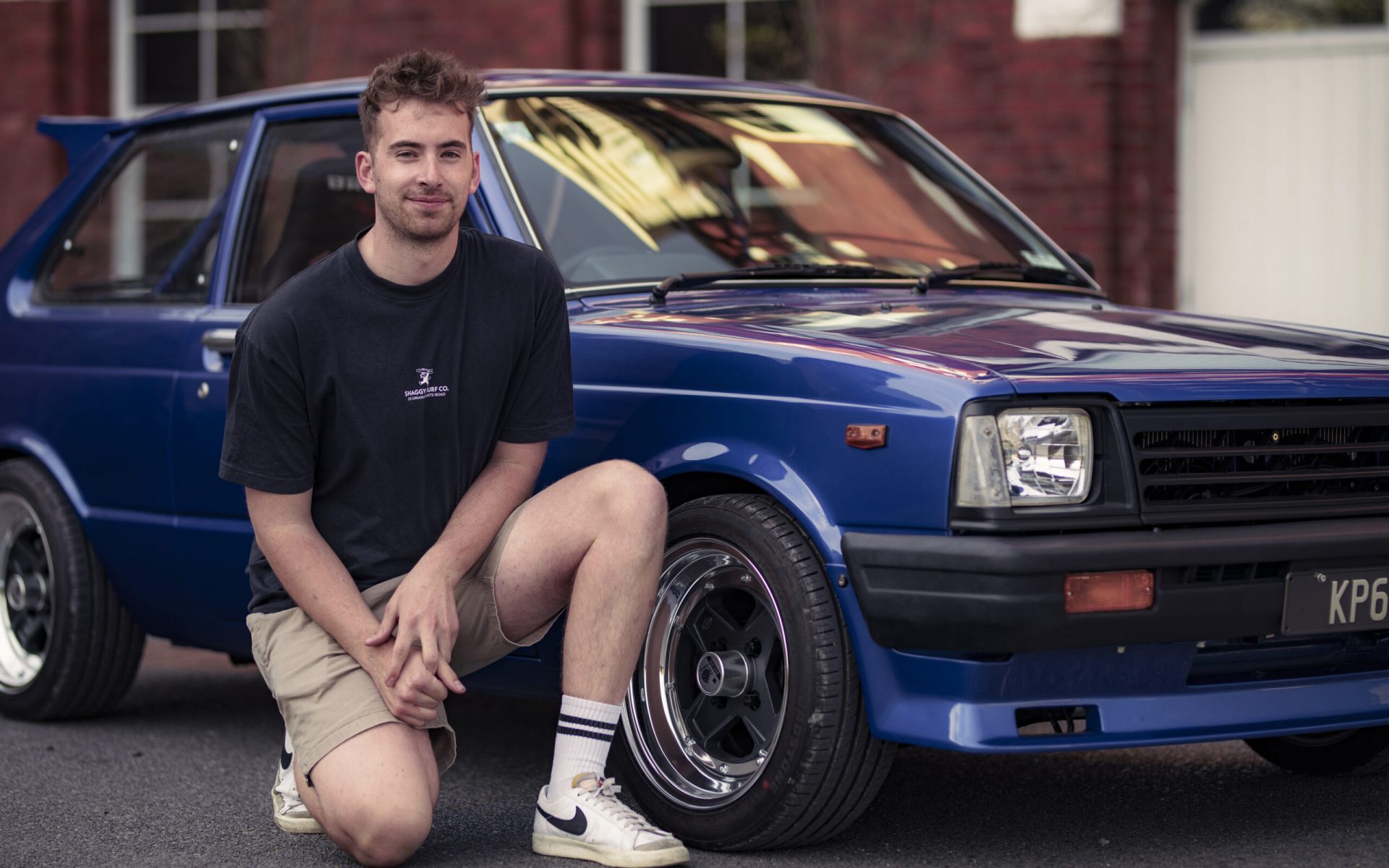
Enthusiasts had other ideas. Blessed with a coil-sprung, four-linked rear, a MacPherson strut front end with a surprisingly quick steering rack and a kerb weight somewhere in the high 700kg region, the teeny Toyota had potential. Go-kart potential. As a result, they were fettled (and thrashed) by enthusiasts almost immediately. From the circuit to the gravel and beyond, the little KPs proved their worth. The appeal’s lasted through the ages — and for 22-year-old Logan, these attributes were a bit of a no-brainer when it came to selecting his first project car.
You read that right. This is Logan’s first crack at screwing together a bit of a project. His pre-Starlet car life consisted solely of his Corolla daily, a turn-of-the-millennium machine with no purpose beyond reliable transport.
What he did have, however, was a “cool dad”, with father Tony having built a particularly potent KP61 race machine packing a boosted 4A-GE 16-valve engine and a plethora of custom fabrication. In Tony’s own words, it was “so fast it was scary”, a testament to his own engineering savvy and ingenuity. Basically, a pretty ripper dad to have in your corner when it comes to piecing together a project!
In fact, it was Tony’s idea to take a project on board in the first place. “He had a bit of space in his workshop, and we’d talked about doing a project together,” says Logan, “and it was around the end of the second Covid lockdown in 2021 that Dad approached me.”
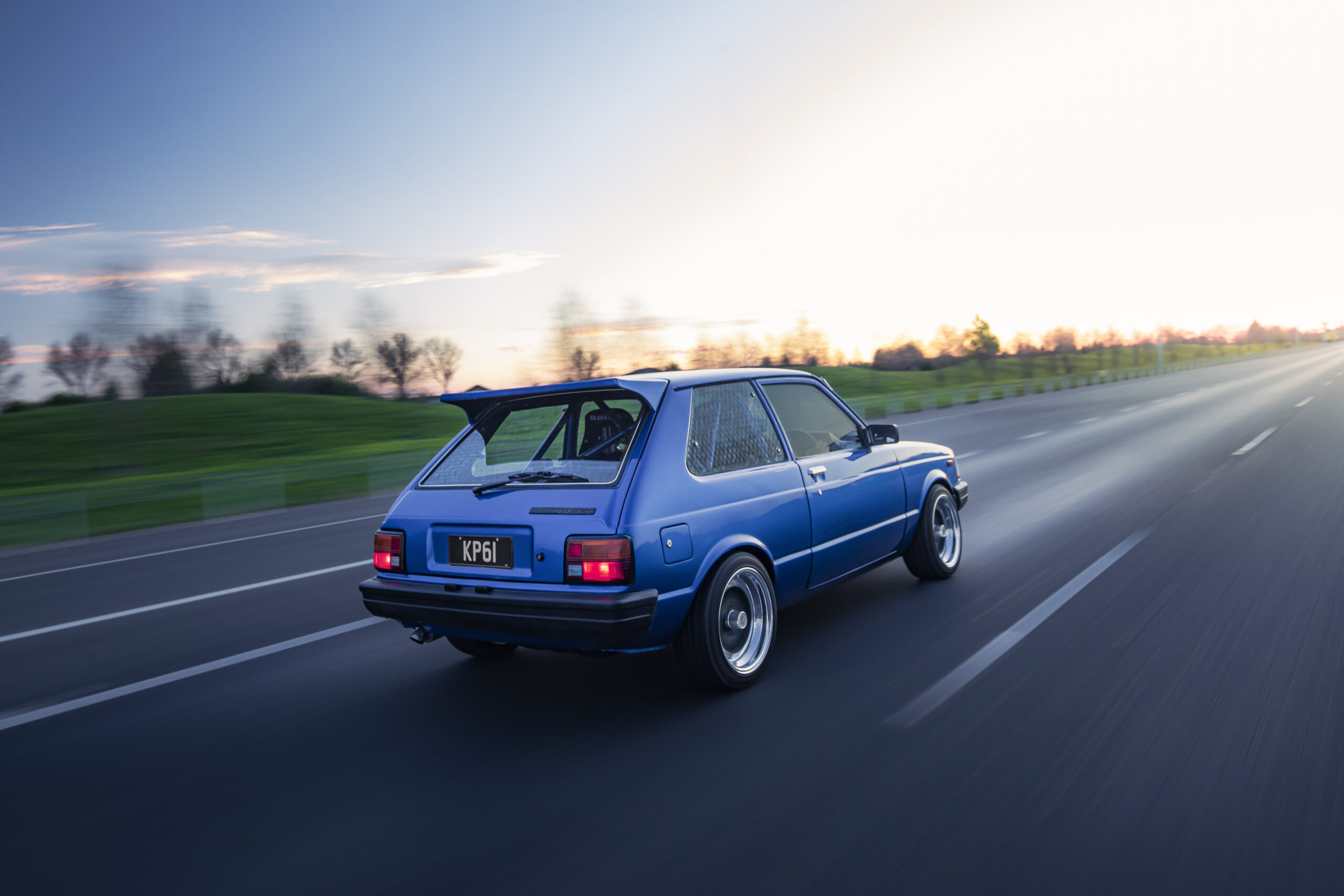
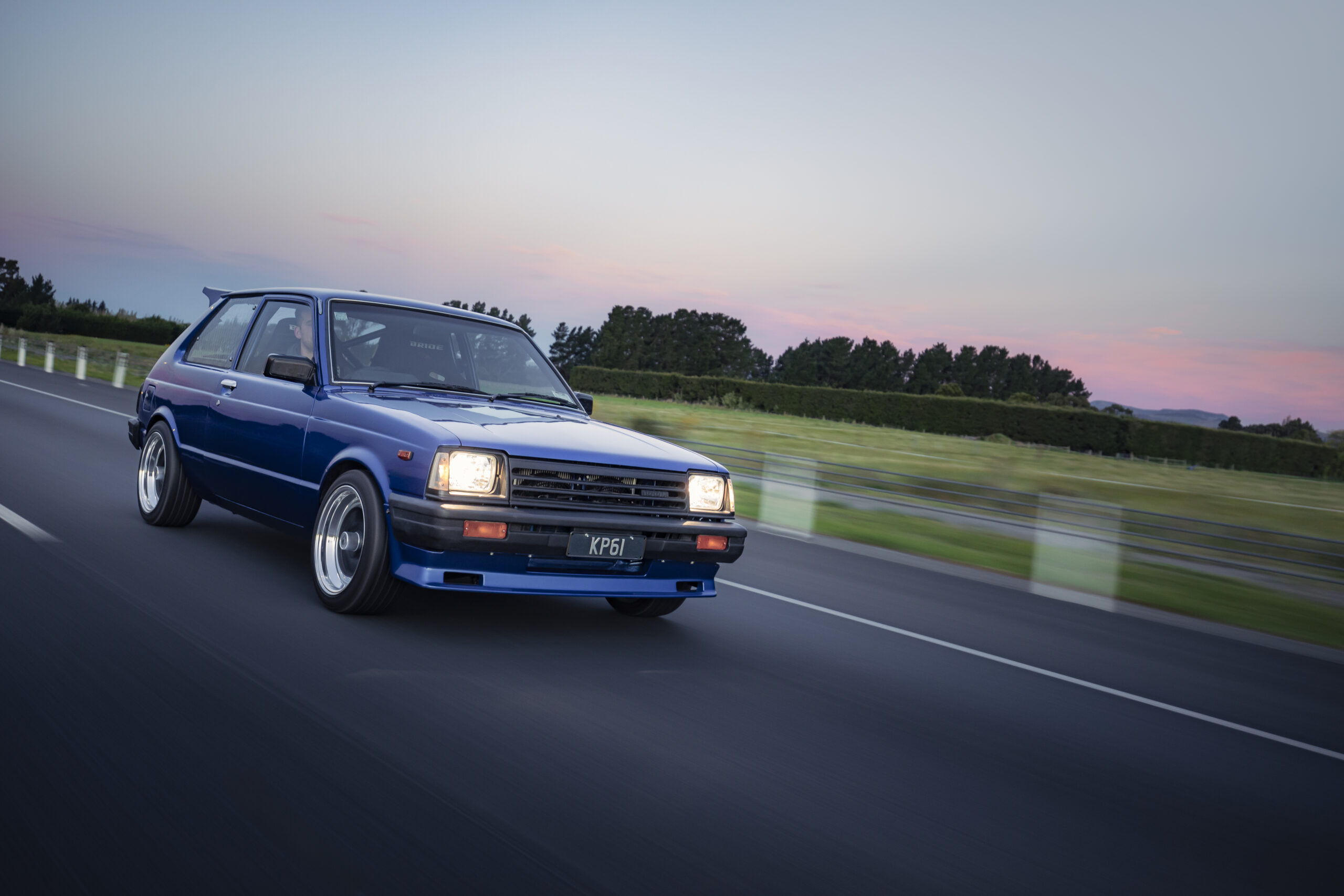
The idea of a compact, lightweight, and smile-inducing machine was in the brief from the get go, with Civics and MX-5s an early consideration among older rear-wheel–drive gear. The desire to do something a little different was what drew Logan to the KP Starlet way of life — well, not to mention the exposure to a certain high-powered example of the breed. The blue car was actually the second example Team Martin considered. A yellow example slipped out of Logan’s hands when the seller decided to pull it from the market, but as is a frequent story these days, Facebook’s trusty Marketplace came in clutch right when it needed to. Relying on a handful of messenger exchanges, Logan agreed to buy the car. “We had heaps of pictures and the guy was willing to sell,” he explains, “it had been freshly painted and the panel work looked great!”
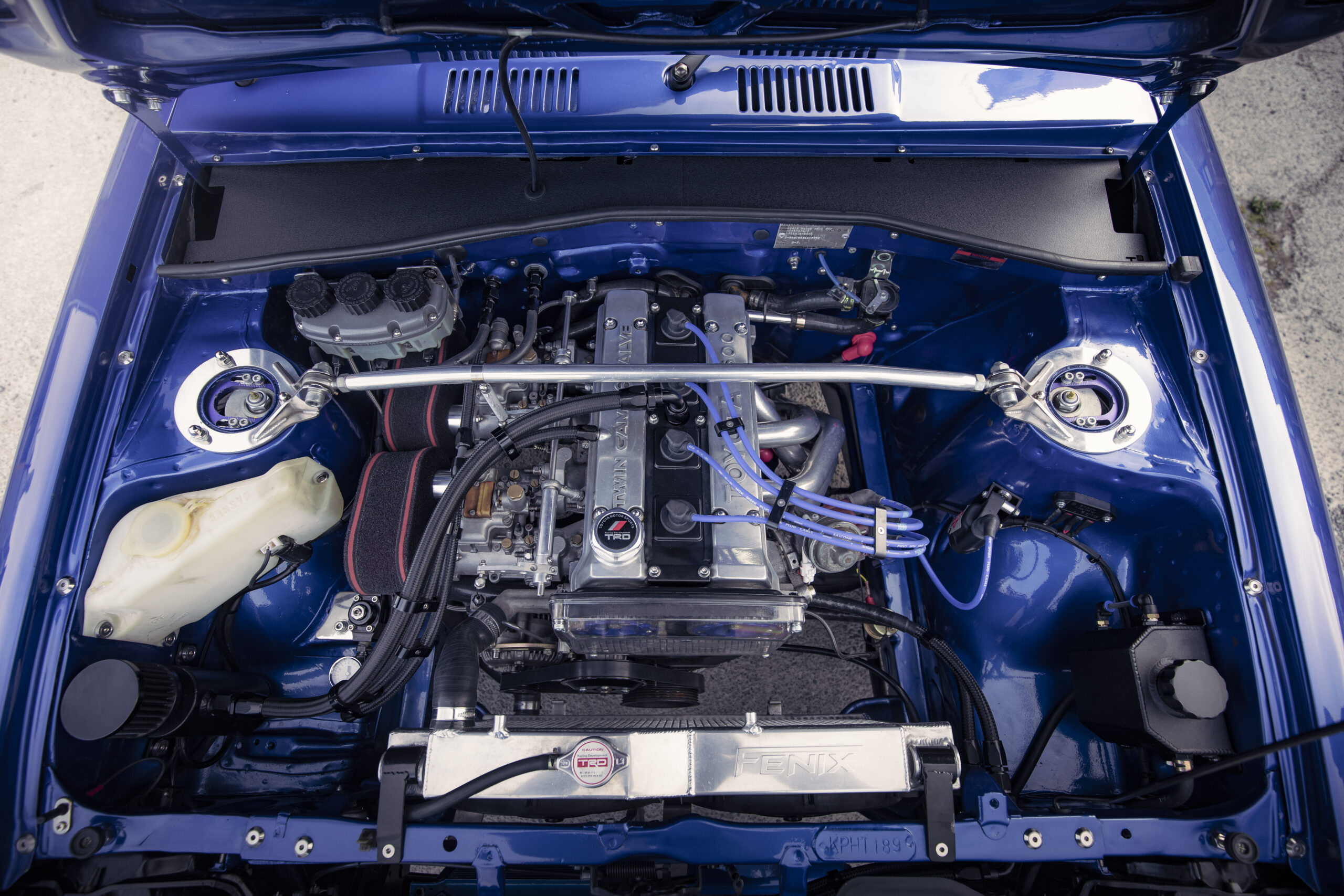
Mechanical expectations were kept somewhat tempered, reckons Logan. The car already had the 16-valve 4A-GE beneath its super-straight bonnet. Not only that, but the W55 five-speed ’box was bolted to the back of it — a strong option from the Toyota parts bin.
The not-so-great? Well, behind that W55 was the factory-issue U-code diff, a diminutive six-inch crownwheel operation, known for grenading even with a simple K-series engine sending what torque it could muster. The brakes were bog-stock, hardly ideal for dragging the thing to a stop time and time again, with over double the factory power on tap.
With the bones of a great mechanical setup in hand, the first port of call was to do something about the KP’s somewhat inadequate rear-end arrangement. Sure, there’s the usual Hilux and other Japanese ‘commercial’ options. But these are pretty heavy and offer fairly agricultural LSD offerings without spending the big bucks.
So Logan looked to England — and in particular, the Mk2 Ford Escort — for a solution. It just made sense. The width was bang on, and there’s a huge range of aftermarket tweaks available. Vinny Fab glued the Starlet mounts to the Ford tube, while the axles were re-drilled to 4×114.3 to match the front hubs. A concoction of Mercedes callipers and Skyline rotors finishes the combo, one of the more left-field features of the Starlet.
A go-kart’s no good without a sharp chassis setup, right? Logan’s equipped the KP with an AE86-derived front strut complete with adjustable coilover, paired with a hefty set of 272mm rotors from a Mini Cooper. They’re grasped by four-pot Wilwood callipers, all controlled from a Wilwood bias-adjustable pedal box — all sourced from bizarrely reliable Facebook marketplace sellers! The rear is converted to a turreted coilover setup, with a QA1 shock and Ohlins spring combo. “When we got the car, it ran and started, but that was really about it,” laughs Logan. The otherwise-standard 4A-GE arrived bolted to a set of behemoth 45mm Weber sidedraft carbs, way too girthy for a mild 1600cc lump.
With a more sensible second-hand set of 40mm Dellorto carbs originally destined for a Datsun acquired, Logan and Tony pulled the evergreen Toyota 1600 down for a refresh. “I always wanted that lumpy cam character,” says Logan, “but initially it wasn’t going to be about big power, just checking the basics were done well and kept within a budget.”
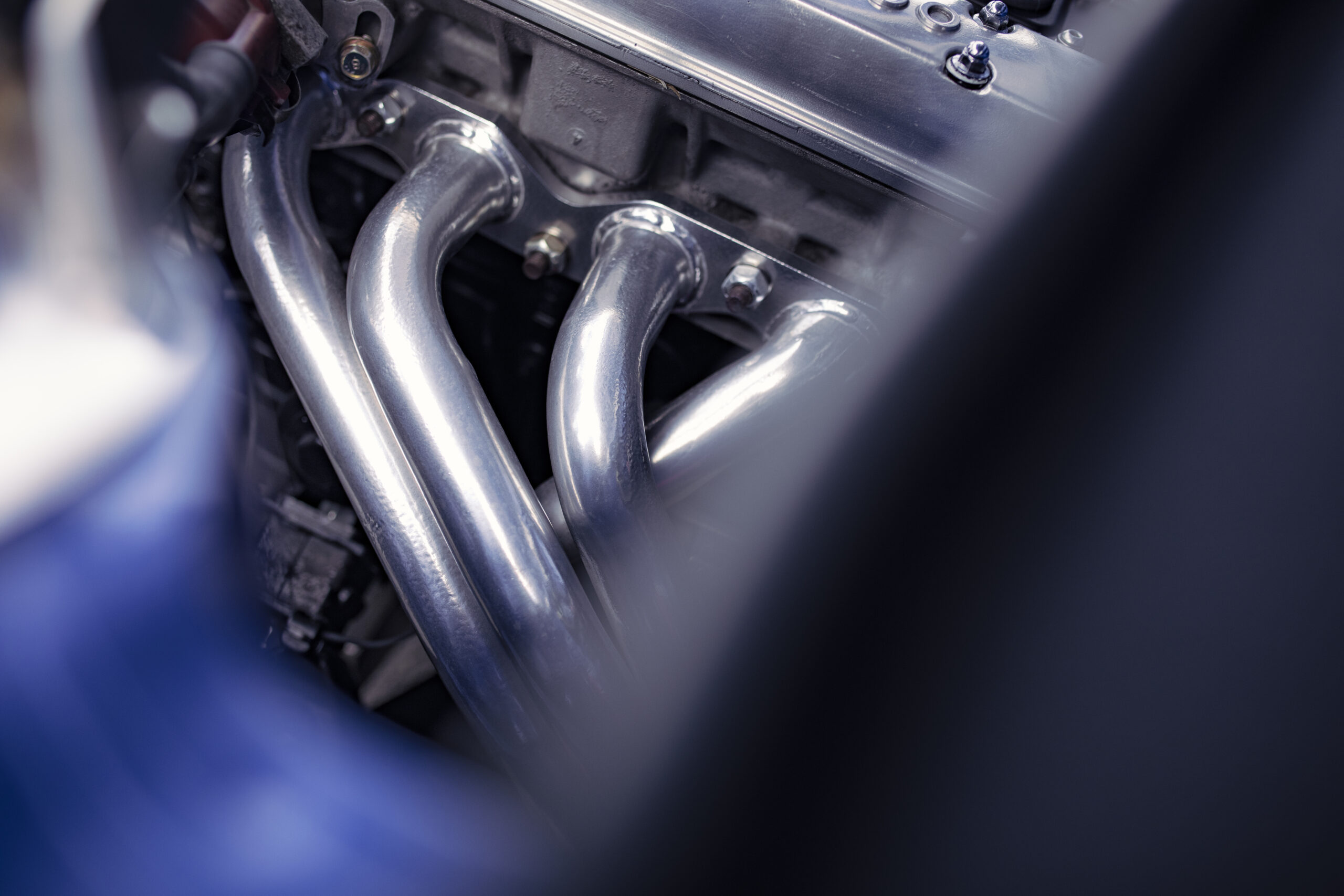
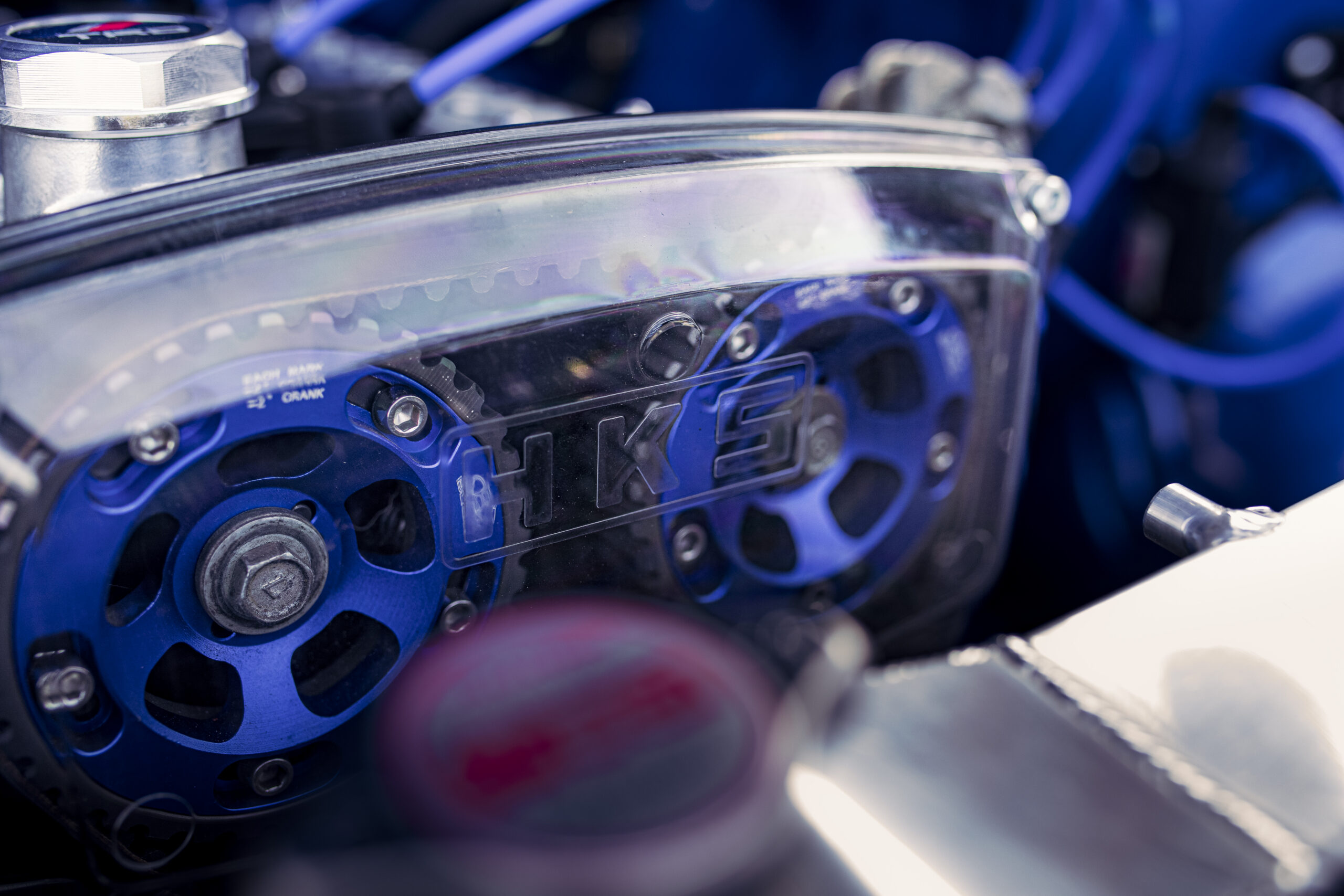
It’s a simple affair. A stock bottom end to factory spec, with a hand-ported bigport head by Peter Kennelly fitted with TRD valvetrain and a set of 272-degree cams to make better use of those individual throttle plates. It breathes though a set of classic Coby 4-1 headers spritzed up with a bright-silver HPC finish, culminating in a 2.5-inch stainless exhaust. It’s got a meaty sounding tone for a 4A-GE — none of the traditional ear-piercing twang as it rockets through the rev-range to a peak output of around 150hp.
On the inside, is where the plans deviated slightly. Logan admits the initial intent was a more street focus, until he really started digging through what he had to work with. “It was pretty untidy when I got into it, with lots of black painted plastic and vinyl, scruffy carpet and trims,” he admits.
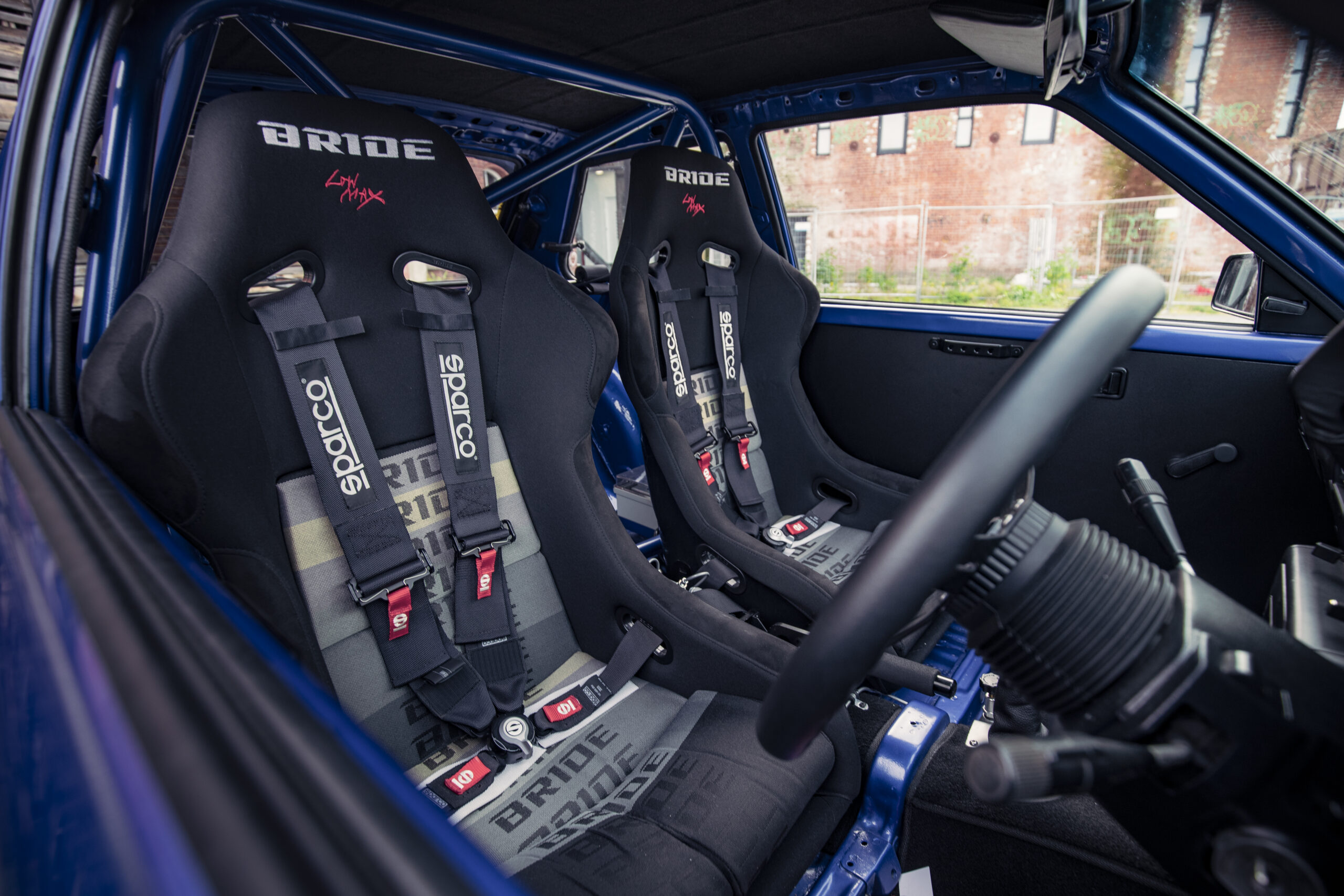
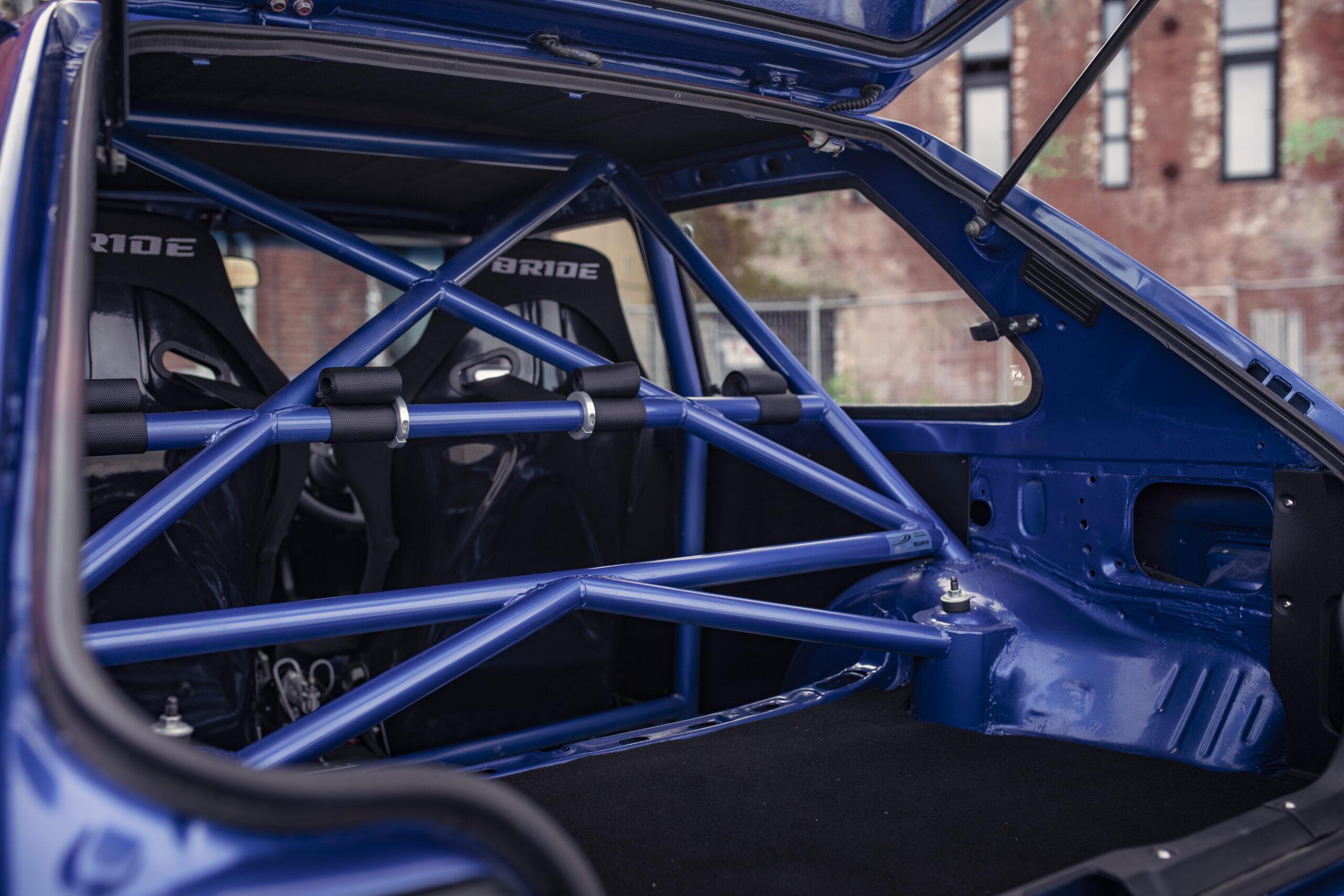
After some deliberation, most of the interior was deemed a bit past salvation, so the project took a further tack toward the road-going go-kart aesthetic, and deviated towards a much more track-focused theme. The centerpiece is clearly the half-cage, welded together by Raycroft Autos and tied into the aforementioned rear suspension turrets. Along with the engine bay, the interior and cage was treated to a fresh coat of blue to match the exterior, creating a cohesive colour palette.
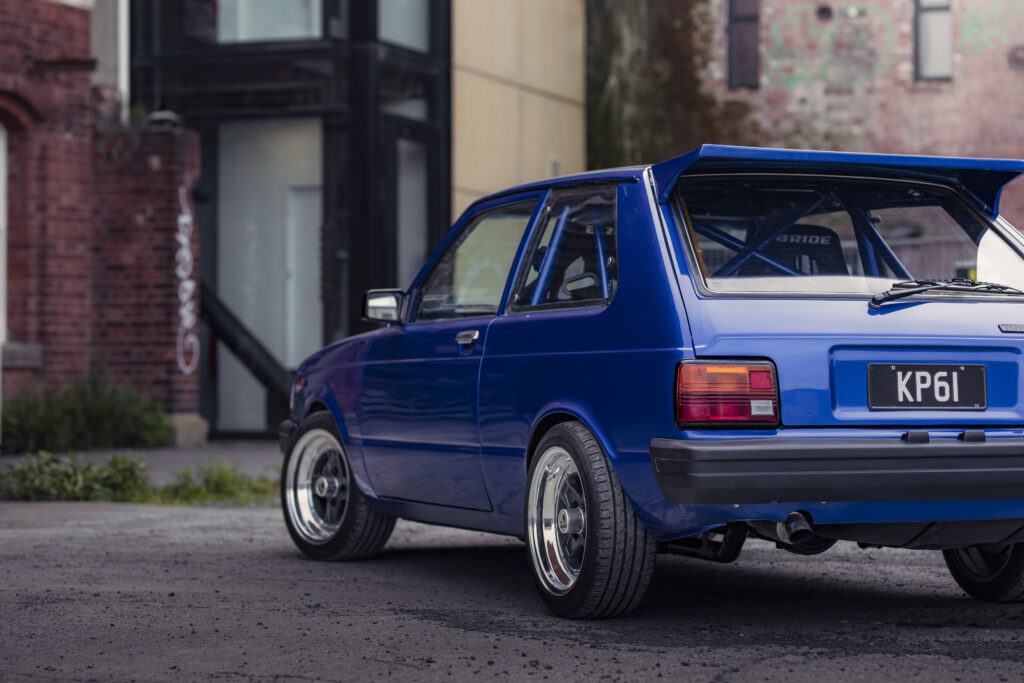
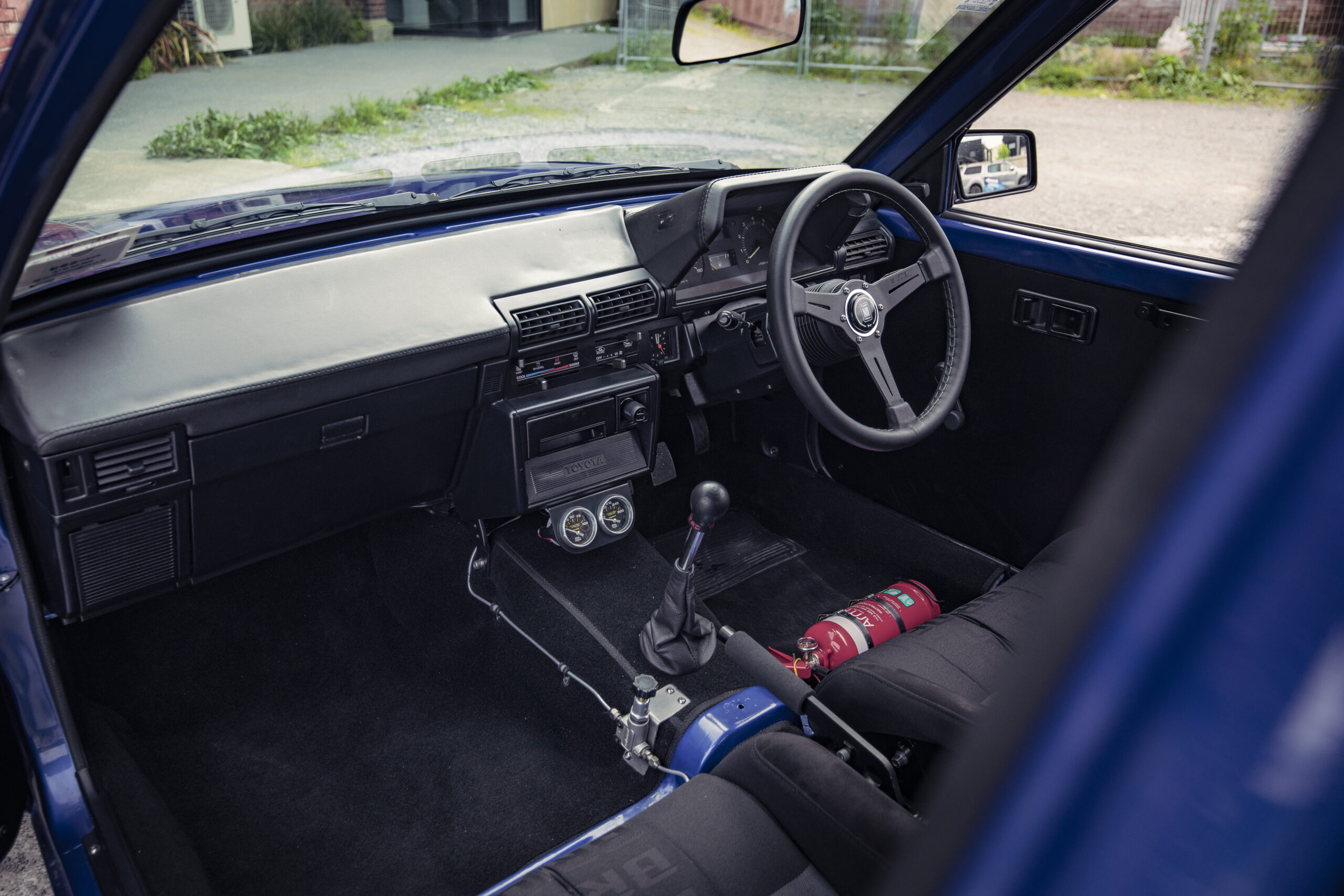
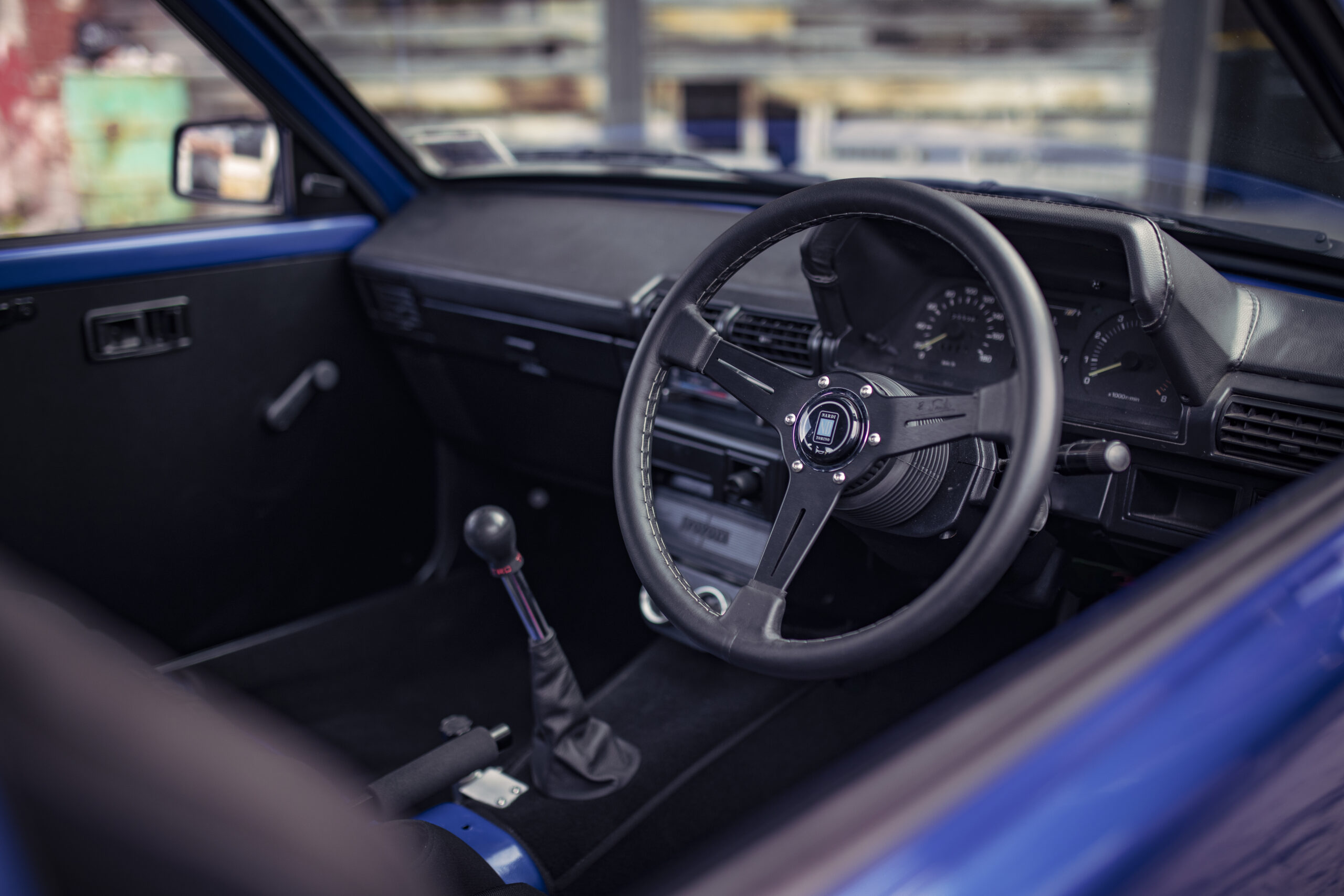
You might as well run bucket seats if you’ve got a cage, right? Logan settles into the confines of a Bride-style fixed-back mounted to custom fabbed rails, with Sparco four-point belts keeping him confident as he gets hard on the picks and turns in towards an apex. The original door trims are binned, in favour of powdercoated black alloy trims but the retention of black carpets keep things just ‘street’ enough, not to mention lending an air of attention to detail to the Starlet’s innards.
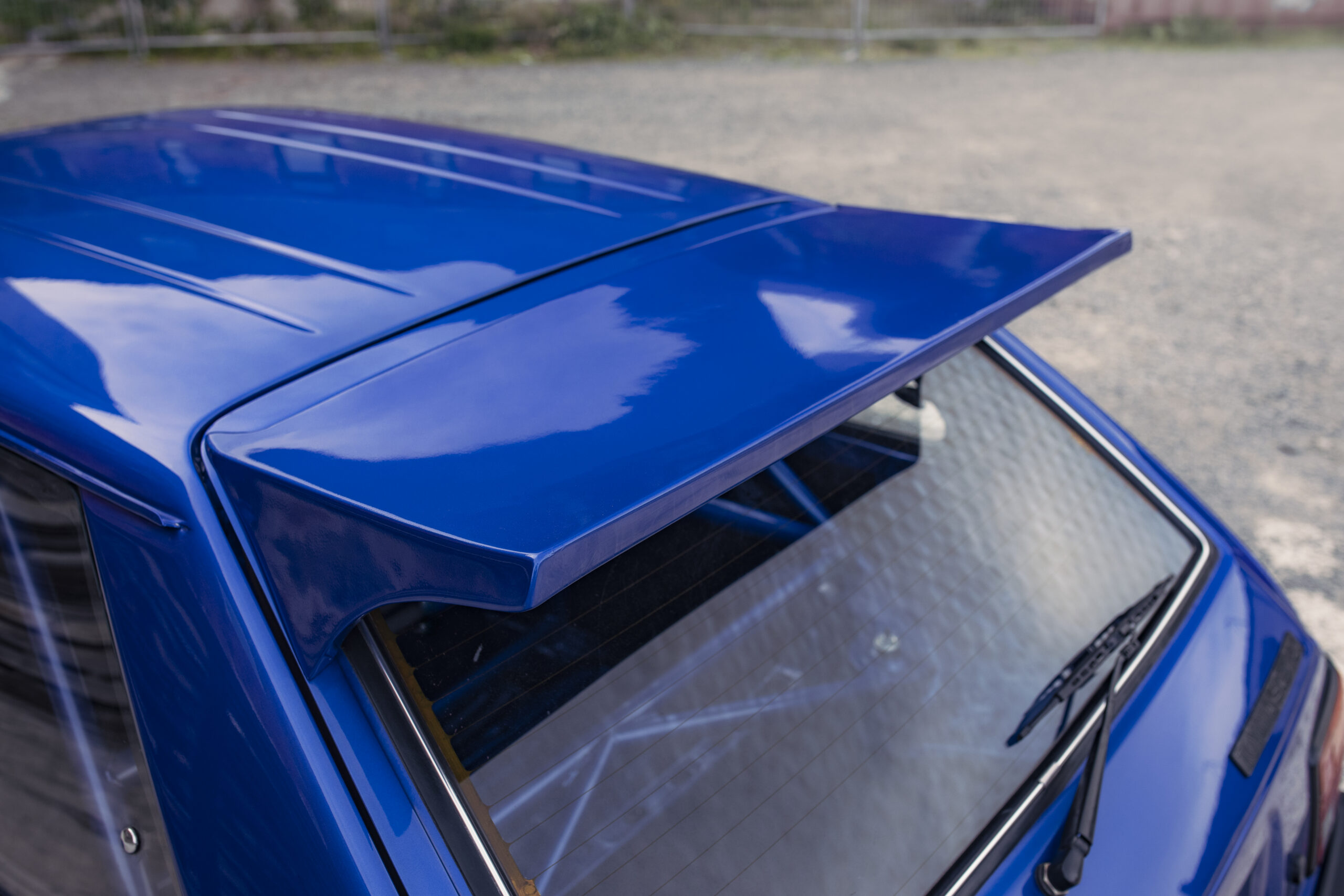
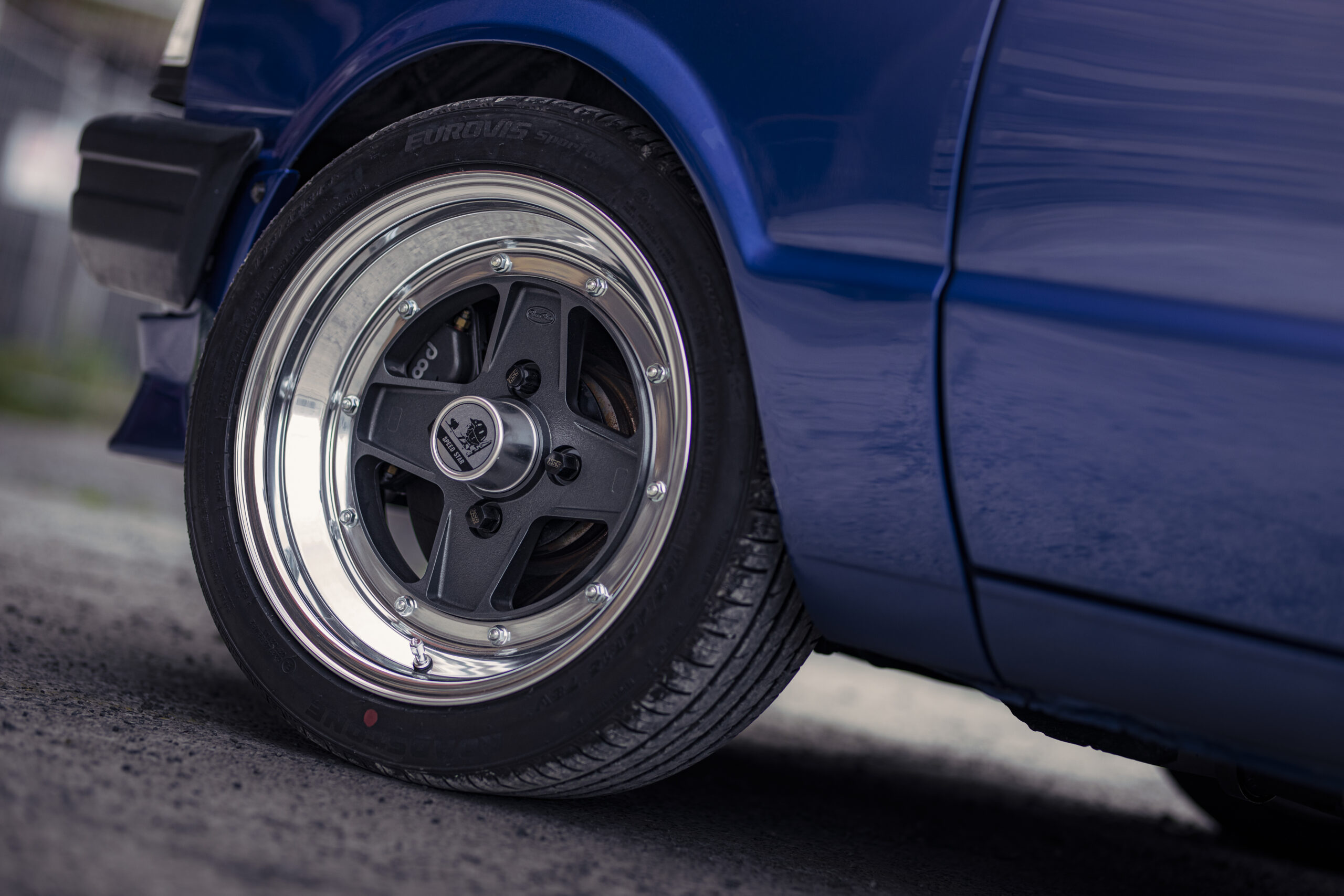
By now, the build had definitely breached the ‘street-legal track car’ concept. So why not add some choice components to the exterior? By design, Logan’s maintained a clean appearance. Big flares and bristling vents weren’t on the agenda. But a subtle front spoiler and TRD-style hatch wing fit the bill perfectly. It endows the KP with just the right balance of track style, no doubt enhanced by the 15×7-inch SSR Mark II wheels, acquired brand-spanking-new from Japan.
She’s an effervescent little build. The 16-valve spins freely to rev limit, breathing willingly and audibly through the twin carbs. By Logan’s own admission, the chassis mods furnish the KP with an “on rails” feel. “It’s agile, and just goes around corners like a go-kart,” he grins, “I love all the mechanical sounds from the induction noise to the diff whine in the rear. It pops and bangs, and you can just jump on the brakes at the last minute and fly into a corner!”
We reckon he’s hit the go-kart mark perfectly. If Logan happens to be at a function, and you get on the topic of cars, don’t just roll your eyes when he explains the driving experience of his little blue hatch. This time, the term is on the money, and after a little over four years of building the KP on a shoestring with an eager mind and a keen mentor on hand, Logan’s ready to get the car on the track and send it!
SPEC LIST
1983 Toyota Starlet (KP61)
Heart
ENGINE: 4A-GE blue-top 16-valve big-port, 1600cc four-cylinder
BLOCK: Factory refreshed
HEAD: 272-degree cams, TRD valves and springs, exhaust and intake hand-ported
INTAKE: 40mm Dellorto sidedraft carburettors, rebuilt and re-jetted
EXHAUST: Coby 4-to-1 HPC-coated headers, 2.5-inch custom stainless exhaust system
FUEL: Aeroflow 3–5 PSI pump, custom aluminium fuel lines, AN fittings and braided hose, Aeroflow fuel regulator
IGNITION: Bosch ignition coil, NGK spark plug leads and plugs
COOLING: Fenix AE86 radiator
EXTRA: Moroso winged and baffled sump, Franklin Performance oil cooler adapter plate, remote oil cooler
Drive
GEARBOX: Toyota W55 five-speed
CLUTCH: Exedy single plate
FLYWHEEL: Toda 3.5kg lightweight flywheel
DIFF: Ford Escort Mk2
EXTRA: Modified axles to suit 4×114, modified and cleaned-up diff housing for track use, custom driveshaft
Support
STRUTS: (F) AE86 KYB strut, Koni shocks and Ohlins springs, Blox camber plates, factory AE86 hubs (R) QA1 adjustable coilovers, Ohlins springs, custom mounts
BRAKES: (F) Wilwood four-pot callipers, Mini Cooper 272mm rotors, Wilwood BP-10 pads, custom mounts (R) Mercedes E190 two-pot callipers, R31 Skyline rotors, Dixcel pads, Magnum Motorsport calliper mounts, Wilwood pedal box with Les Hunter Racing frame, Tilton brake reservoir, Wilwood hydraulic handbrake
ARMS/KNUCKLES: Factory AE86 power steering knuckle, KP Starlet Sprint front sway bar, KP Starlet steering rack, KP Starlet lower control arms, modified rear KP Starlet trailing arms with ⅝ diff end rose joints, KP Starlet top trailing arm mounts, Vinny Fab lower arm mounts
Shoes
WHEELS: (F) 15×7-inch (+0) SSR Speed Star MK-II (R) 15×7-inch (+0) Speed Star Racing MK-II
TYRES: (F) 195/45R15 Roadstone (R) 195/45R15 Roadstone
RACING SETUP: (F) 14×7-inch (+11) SSR Speed Star Colin Starsharks (R) 14×7-inch (+0) SSR Speed Star Colin Starsharks (F) 185/60R14 Nankang AR1 semi-slicks (R) 185/60R14 Nankang AR1 semi-slicks
Exterior:
PAINT: Modified Subaru Blue
ENHANCEMENTS: TRD rear wing, Mikeshaw fiberglass front splitter
Interior
SEATS: Bride replica, Sparco four-point belts
STEERING WHEEL: Nardi 350mm, HKB boss kit
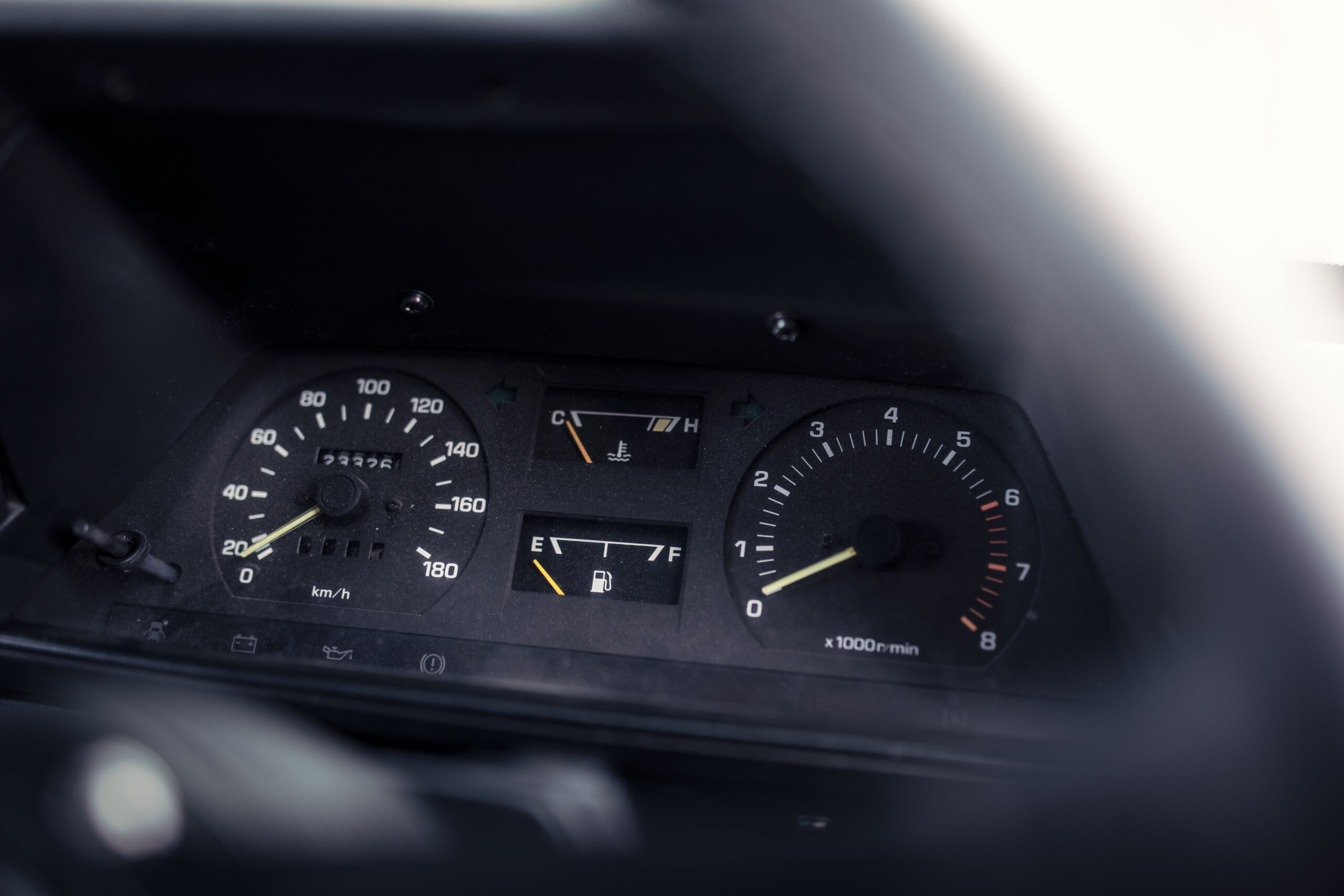
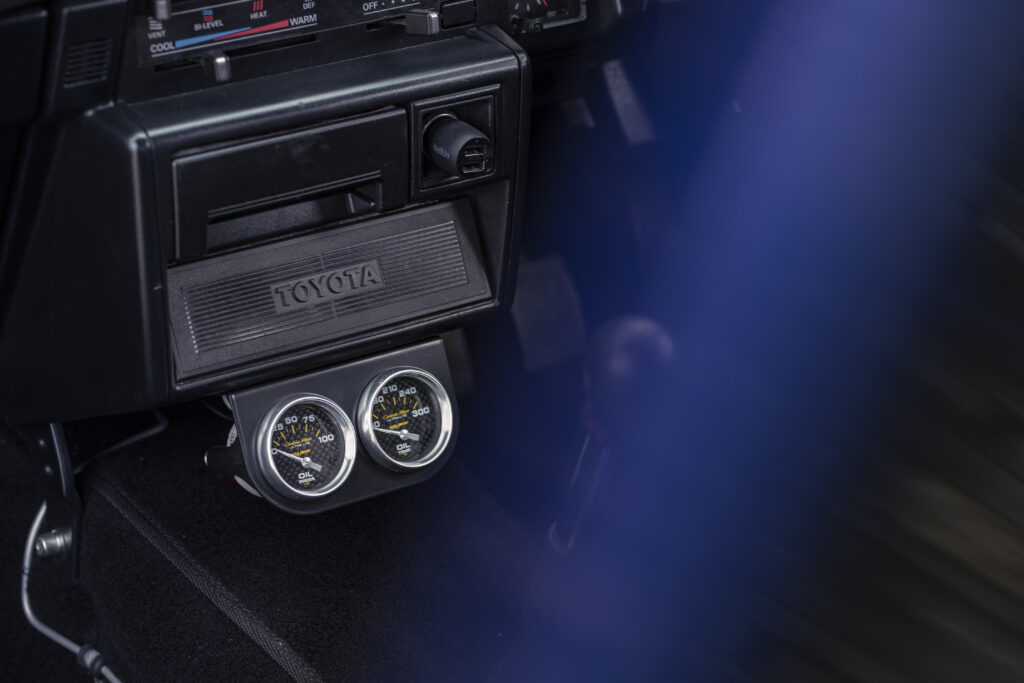
INSTRUMENTATION: Sprint cluster with tachometer, Autometer Carbon oil pressure and oil temperature gauge
EXTRA: Custom half cage
Performance:
POWER: 110kW
FUEL TYPE: 95 Octane
TUNER: Brent from Palmside
Driver Profile:
DRIVER/OWNER: Logan Martin
AGE: 22
LOCATION: Christchurch
OCCUPATION: HVAC and Refrigeration
BUILD TIME: 4.5 years
LENGTH OF OWNERSHIP: 4.5 years
THANKS: A huge thanks to my dad, Tony Martin, along with Jason and Josh English, Phil Jerard, and Rick Matheson for helping make this build possible. I also want to thank Palmside for parts and mechanical services, Vinny Fab and Raycroft Autos for their fabrication work, Stealth Ride and Flos.IE for supplying parts, Kennelly Cams for building the engine, and Les Hunter Racing Products for their support during the early stages of the build.
_________________________________________________________________________________________________
This article originally appeared in New Zealand Performance Car issue 318